Music Distribution: How Can an Artist Earn from Streaming Platforms
An in-depth article on music distribution, useful both for a beginner and for an experienced artist/manager.
Which distribution service should you use to distribute your music? Which label should you choose? How do you monetize?
So that our release happens not only on the Instagram page and YouTube channel — let’s get into it.
1. Exploring music distribution options: what distribution is, why it matters for an artist and their development.
Music distribution — in short — is the dissemination of audio recordings with the aim of increasing streams and music sales!
And more specifically, it is a process that includes distributing music through various channels, such as online stores, streaming services, radio and television stations, physical stores, etc. It is an important stage in any musician's career, as it allows their work to reach a broad audience and generate income from sales or streams.
Note: both the revenue from sales and the popularity of the artist's work depend on how effectively the distribution process is implemented.
There are many music distribution options and distributors, and choosing yours depends on many factors, such as the music genre, your level of popularity, the prospects opened up by working with a distributor (additional promotion, marketing, management), and accordingly your budget and many other factors. In the following points, I will look at the main music distribution options, their advantages and disadvantages, which will help you choose the best option for your development.
2. Types of distributors: what they do and what types of distributors there are (for example, traditional distributors, aggregators, distribution through labels, direct distribution through music services).
Given the development of the digital era, the number of ways to distribute your music is increasing. There is also a side effect!) With each new way that appears, the volume of the contract with the distributor increases by an average of 5 pages. Let's look at the most common music distribution options and their types.
Note: distributors may use the services of other distributors to expand their capabilities.
Traditional distributors
Traditional distributors are the first companies that distributed music on physical media (CDs, vinyl records, cassettes, etc.). These companies usually have a wide distribution network and ties with music stores. As physical media are becoming an endangered species, (but they won't disappear! Listening to music on vinyl is cool!), in recent years traditional distributors have begun to focus on digital music distribution, because everyone wants to earn money :)
Traditional distributors also include the largest, or as they are called, Major labels, the three whales on which most global hits rest:
• Sony Music
• Universal Music Group
• Warner Music Group
Among Ukrainian companies, the following can still distribute physical media:
• Moon Records;
• Comp Music.
Aggregators
Aggregators are intermediaries between the artist and digital music services such as Spotify, Apple Music, Deezer, etc. Aggregators provide the ability to upload music to these services and receive remuneration from their use. Aggregators usually provide control over streaming statistics and tracking music sales. This is convenient! After all, each artist can monitor what is happening with a release from their personal account, see and analyze listens and the audience, write to tech support, and upload releases themselves. However, this is also a downside for those who do not want to deal with all of that! It takes time that could be devoted to more priority tasks.
• CD BABY
• TuneCore
• Soundcloud (yes, it is also an aggregator, not only a streaming service)
An aggregator is a good option for an independent artist. But there is an alternative:
Distribution through labels
Usually, music labels are small companies that specialize in releasing and selling music recordings, as well as distributing them through various distribution channels.
And they either work with subsidiaries of major labels (distributors), such as Believe, The Orchard, or with aggregators. Some directly secure direct contacts with music services, and only a select few receive direct support from major labels (this is really powerful, actually!).
Music labels may have their own distribution networks, for example, selling their releases through their own online stores or making sales at concerts or other events. In addition, labels usually take responsibility for selling, marketing, and promoting the release, which includes organizing concerts, creating video content and promo materials that help spread the music. They handle distribution to radio stations, media, influencer marketing... because the label is an interested party in earning together with the artist! If this is an ecological business (roughly speaking, when the label invests money in the artist's creative work for future earnings), then the amount of placements covered determines the profit and the return on investment for both.
• ENKO
• Pomitni
• Plan
Direct distribution through music services
Direct music distribution through music services is a process in which the artist independently uploads their music to digital music services without intermediaries. This option can be profitable for artists who do not want to pay commissions to aggregators. But is it worth it?
In theory, it is possible to distribute your own music to music platforms such as Spotify, Apple Music, etc. without the help of a distributor, but this can be somewhat more difficult and sometimes less effective.
Music platforms that offer music content usually have their own rules and requirements for uploading and publishing music. For example, Spotify has its own platform for uploading and publishing music called Spotify for Artists. To gain access to this platform, an artist must have a Spotify account and register for Spotify for Artists. You’ll need it anyway for tracking statistics. But in my opinion, it’s better not to overthink it and just pay the aggregator’s or distributor’s fee.
3. How to choose a distributor: criteria to consider when selecting a distributor, such as price, percentage of sales, contract terms, reviews from other artists, etc.
Price and percentage of sales: one of the most important criteria is the price distributors charge for their services, as well as the percentage of music sales they take. It is important to choose a distributor with a reasonable price that offers an adequate percentage of sales. The standard percentage a distributor keeps is 25–30%.
And some give the artist all the profit, deducting only tax. They earn from a fixed fee for delivery, or from additional music promotion services.
A few examples:
• CD BABY aggregator
Commission: CD Baby keeps 9% of each music sale on digital platforms. This means that 91% of the revenue from music sales will go to the performer.
+
Fixed price: CD Baby offers different distribution packages depending on the performer’s needs and wishes. One of the popular packages, "Standard," costs $9.95 for one album or $29 for an unlimited number of singles for one year.
• TuneCore aggregator
TuneCore’s fee consists of a standard distribution fee of $9.99 for one album per year or $29.99 per year with no limit on the number of releases, plus 20% of the revenue from music sales on platforms.
It is important to understand
When releasing through a label whose contract states that they will take 30% from your music sales, clarify how much MORE % above that is taken from sales by their distributor, which they use. After all, that’s also money :)
And in general, it is appropriate to ask which distributor the label works with, even to check the reputation of its contractors; this is not confidential information.
You can very easily check which distributor your label uses yourself on YouTube under the label’s artists’ releases:
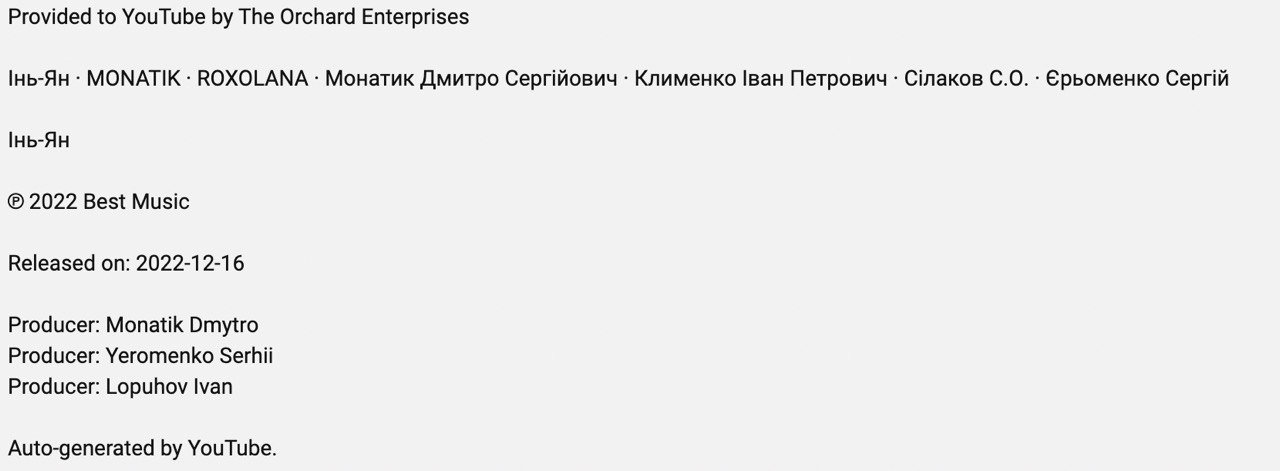
Here we can see that the song MONATIK and ROXOLANA - Yin Yang was released through Best Music, and above them stands The Orchard Music distributor, which in turn is a subsidiary of Sony Music Entertainment.
For example, at muzika.ua:
Fixed price: $23 per single or $47 per album, and 100% of all royalties that come to us from the distributor remain with the artist. This model is ideal for music projects that want to earn from digital distribution royalties. After all, out of the hypothetical $100/month generated by your song, we do not take a percentage of the income and pass everything on to you.
Contract terms: before signing a contract with a distributor, you should carefully read its terms. Pay attention to the contract term, whether the contract is tied to a specific release (single / album) or whether it dictates the terms of your future releases. What are the termination terms? What direct obligations does the distributor have, and what does it expect from the artist in return? Does the distributor claim ownership of part of the rights to the release? and other important questions.
If you are seeing such a contract for the first time, use the services of a qualified lawyer who will help you avoid getting caught out through carelessness or simple misunderstanding of complex wording.
At muzika.ua, we can help with legal support and reviewing the contract with your distributor; we always stand on the side of protecting rights and independence.
Reputation: before signing a contract with a distributor, it is worth finding out what its reputation is among other artists. Talk to colleagues who have used this distributor’s services; they will tell you about any pitfalls, if there are any. Reviews online are actually quite hard to find now for Ukrainian labels, so the only way left is to communicate :)
Specialization: some distributors specialize in a particular music genre or a particular market. For example, there are distributors that specialize in electronic music, such as Gonivo Records; artists value the team spirit within this label, they all develop and grow together, which is also important — community. So choose a distributor that specializes in your genre of music.
Support: choose a distributor that offers good support for its artists. This can include various resources and tools, such as consultations, services, media exposure, posting in their playlists, social media, etc. It’s great when a distributor is passionate about its artists! It is also important to consider how quickly and effectively the distributor responds to its clients’ requests and issues.
When choosing a distributor for your music, it is important to be careful and thoroughly study all possible options. Don’t be afraid to ask questions and reach out to other artists for advice. Even small details can decisively affect the success of your music and career, so choose a distributor with all the necessary tools and resources that can support you on your journey.
4. How to register your music with an aggregator: an overview of the registration process, step by step, with technical features and nuances specified.
You can register your music on distribution services as follows:
1. Choose the distribution service you want to use to place your music.
2. Create an account on the distribution service.
3. Upload your music in the format required by each distribution service. Recommended: WAV with a size no larger than 200 MB.
4. Fill in information about your music, including the title, authors, genre, year of release, add lyrics, etc.
5. Choose the date when you want your release to be published. I recommend setting it at least 2 weeks from the delivery dateto give it a chance to попасть into Spotify editorial playlists.
6. Set a price for your music or choose the option of free distribution.
7. Choose seconds for playback on TikTok and Instagram.
8. Upload the cover art for the album or track. Recommended cover size - 3000x3000 pixels, JPEG format.
9. Confirm the distribution terms and sign the electronic agreement with the distribution service.
After registering the music with distribution services, it will take some time for the music to appear on the platform. The timelines may vary depending on each service. Again, I recommend setting the release at least 2 weeks from the time of delivery. So that it doesn’t happen that on release day it is still not on Apple Music (that’s where problems most often occur).
In general, it’s best to prepare for a release well in advance. Beginners usually think that as soon as their track has been mastered, they need to release it the next day.
As you can see, it’s not that simple or fast :)
5. How to interact with a distributor: tips for working with a distributor and maintaining relationships for successful promotion in line with algorithms.
When you have chosen a distributor for your music, it is important to interact with them, communicate, and be invested in the result. Here are some tips for working with a distributor:
Communication: it is important to have direct communication with your distributor, share your goals and problems with them, give feedback on their work and tools, to ensure mutual understanding and understand listeners’ needs.
Marketing: The distributor can help you set up marketing campaigns to draw attention to your music. They can help you with promotional materials, social media support, and other marketing initiatives.
Documentation: Tracking the documents you receive from the distributor, such as sales reports, contracts, release agreements, etc., is important to ensure correct calculation of your earnings.
Analytics: Working with a distributor, it is important to analyze data on music sales and its distribution so that you can understand your audience, where it is concentrated, which release performed better and which worse, and why? Make better marketing decisions and collaborate with other artists to take your career to the next level.
Support: Your distributor should be ready to provide support and advice on issues related to music distribution, rights, and other professional matters. It is extremely important to have an experienced partner who can help with understanding the music distribution process and provide effective support in relations with distributors. A partner can help with choosing the optimal distributor and reviewing contract terms. . Key success factors in music distribution are technical readiness, qualified management, and an effective marketing strategy.
Keep in touch: Maintaining the relationship between the artist and the distributor is very important. Artists (their team) should always keep track of their releases and monitor how their music is being distributed and sold. When questions or problems arise, you should contact the distributor for help or advice.
Understand the contract: Artists should carefully study the contract with the distributor and understand all terms of cooperation. It is important not just to read it carefully, but also to understand all the rules related to the sale and distribution of music, so that there are no misunderstandings, unnecessary losses, or stress.
Develop a promotion strategy: Distributors usually offer music promotion services, but it is worth having your own promotion strategy that will help attract more listeners. Artists can use social media and other online platforms to promote their music and attract a new audience. It is important to plan your ad campaign and define goals and success metrics.
Work with professionals: If you do not have experience in music promotion, it is worth reaching out to professionals who can help organize music promotion campaigns. You can also turn to other artists or managers who have experience working with distributors and ask for advice.
And finally! No, this is not an ad for MUZIKA :))
The answer to the question: how much will I earn from music on streaming platforms?
Each music streaming service (Spotify, Apple Music, Youtube, etc.) has its own payout rate, which also depends on many factors and may not be fixed, but on average, for one thousand streams on streaming platforms you will receive $2 - 3 (no, not thousand, just $2 - 3 / one thousand streams).
What I wanted to convey in this article is that understanding what is happening with your music at each stage is important! After all, when you simply go with the flow, you can end up on the wrong shore somewhere. Or even go out into the open ocean, where you can’t see any shores at all. I hope this article was useful! I would appreciate your comments; if you noticed any inaccuracy, let me know so I can improve the material!
Author: Pavlo Striletskyi