Distribution and pitching work: Q&A with Independent Digital
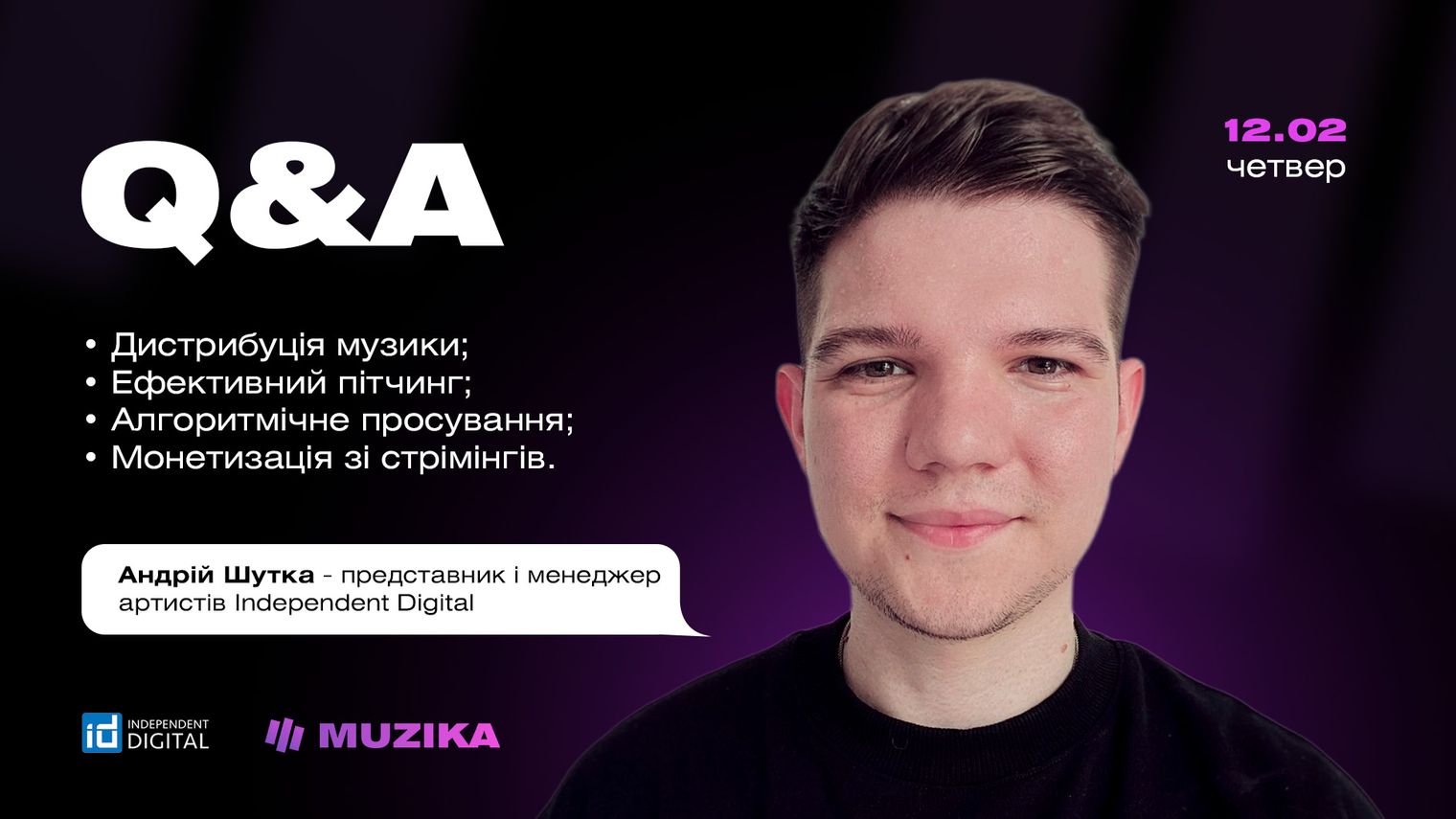
Distribution and pitching work
(Andrii Shutka – Independent Digital)
Notes from the online meeting on 12.02.2026
1. Priorities for a new artist: pitching vs. advertising
Recommendation: first work on the audience (social media, platform profiles, YouTube), then handle pitching. Pitching is the “final step” after pre-release work.
2. Preparing for pitching: what to provide the editor
- Track description (idea, creation process, participants).
- Short artist bio and achievements.
- Marketing plan (radio, media, influencers, pre-save, planned posts) — it should show that there will be demand.
3. The value of a release and the role of distributors in the future
- The release should be prepared (promotion before the premiere). Rushing (“released and forgotten”) reduces effectiveness.
- In 5 years, independent distributors will likely be in greater demand: more flexible terms, simpler contracts, rights retention.
5. Common artist mistakes
- The most common mistake is rushing, with no promo preparation or content plan before the premiere.
- Underestimating the importance of planning (3–4 weeks is recommended for pitching; at least 7 days is the deadline for the editor).
6. How editors choose tracks
- Editors evaluate not only the submitted information, but also the artist’s presence on social media, Shazam, radio, TikTok, and streaming statistics.
- Editors are tasked with “mixing” playlists so they attract listeners — they select both major and new/promising artists.
7. Myths about playlists debunked: guarantees and priority pitching
- There are no guarantees of getting into editorial playlists; any “guarantees” are fraud.
- Priority consideration (from the distributor) only means the submission will be additionally highlighted/reminded to the editor — the decision still rests with the editor.
- Placement through a major label is not any kind of guarantee — preparation and the artist’s statistics matter more.
8. Pitch language
It is recommended to write in English (editors and cross-territory communication).
9. Release date: Friday vs. other days
- Friday (or Thursday) is the traditional premiere day, but the choice of date may depend on competing releases by major artists; it can be adjusted to fit your strategy.
- New releases every Friday also include tracks released on other days of the week.
10. Content ID, claims, and rights protection
- Content ID is a YouTube and Meta tool for identifying audio use; it allows videos to be monetized, blocked, or tracked.
- If a claim comes in: check the type of claim (reference vs. claim), gather rights documents (beat license, contracts, creation date, screenshots, studio materials), and contact the distributor/lawyer.
- Recommendation: keep documents, proof of beat purchases, recording dates — this will help defend your rights.
11. Artificial intelligence (AI) and future labeling
- Platforms are working on labeling content created with AI (audio and cover art). Metadata may include a “created with AI” tag.
- Questions of rights and monetization of AI content are currently unresolved; regulatory development and labeling are likely.
12. Tools and underestimated opportunities
- Hyper link / pre-save links (links with subscription/reward options) — increase engagement and organic subscriptions.
- Dolby Atmos (especially for Apple Music) — provides advantages in algorithmic promotion and higher revenue per stream.
- Discovery Mode (Spotify) — a tool for promotion in recommendations (has requirements, paid promo should be used carefully).
13. Monetization: territories and differences
Revenue depends on the listener’s territory, the type of listening (subscription vs. ads), and the platform. In general: UK > USA > Poland > Ukraine (approximate observation), but it all depends on the specific report data.
14. Safety issues: bot playlists and fraudulent practices
- Never pay to get into editorial playlists; it is a risk for the artist.
- Check curated playlists for inflation and bots (there are external services, submithub, etc.). Using “black hat” methods can lead to content removal or fines and damage to reputation.
15. Technical issues: linking releases to the artist page
- Possible reasons for a release being “incorrectly” linked to an artist page: distributor technical work, metadata mismatches (titles, letter case), encoding errors.
- Metadata needs to be monitored, and if problems arise, contact the distributor for checking and correction.
Questions from the chat — brief answers
- Pitch language: English.
- Pitch preparation: 3–4 weeks is desirable; minimum — 7 days before release.
- Content ID claim: usually the distributor can monetize and manage claims; in disputed cases, documents and a lawyer are needed.
- AI content: currently without a clear policy; services are planning metadata labeling.
- Rebranding (changing the artist name): possible, but a complex process — metadata must be changed, statistics preserved, profiles combined, and track delivery to platforms controlled.
Practical recommendations for artists/managers
- Plan releases in advance: 3–4 weeks for pitching, minimum 7 days — the deadline for editors.
- Work on profiles (Spotify for Artists, Apple Music for Artists, YouTube) — complete, verified profiles help editors.
- Collect proof of rights to the beat/audio (licenses, contracts, recording dates) and keep them for Content ID disputes.
- Avoid “black hat” schemes and paid guarantees of getting into editorial playlists.
- Use pre-save and audience engagement tools to increase organic subscriptions.
- Consider Dolby Atmos, Discovery Mode, and other paid/technical tools carefully and as part of a long-term strategy.
Conclusions
A release’s success is systematic work: profile preparation, pre-release marketing, audience targeting, proper pitching, and metadata control.
The distributor’s role remains important (consultations, pitching submissions, Content ID work), but independent artists are gaining more opportunities through the simpler terms of independent distributors.
Artists are advised to focus on consistent audience engagement and high-quality release preparation, as well as keeping documentation that confirms rights to the content.
Questions and next steps
For collective inquiries regarding partnerships with educational/production centers — send a detailed proposal to muzika.ua for review.
In the event of issues with claims/artificial streams — promptly contact the distributor and the platform support team (Spotify for Artists, YouTube support).
Author: Pavlo Striletskyi