Independent artists’ concert events in 2027
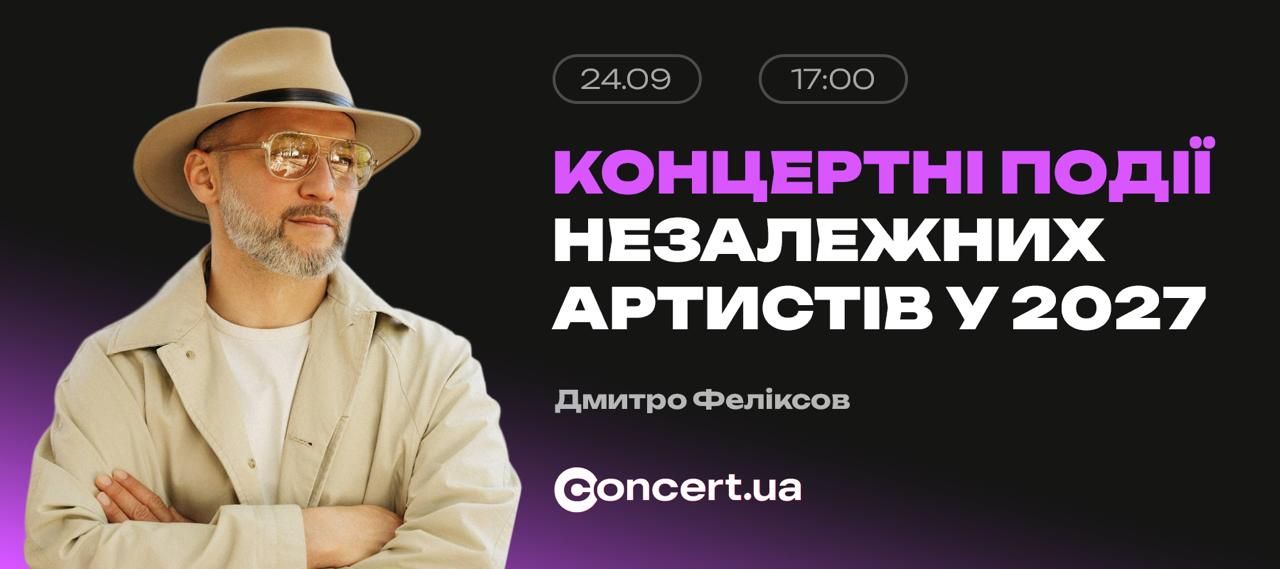
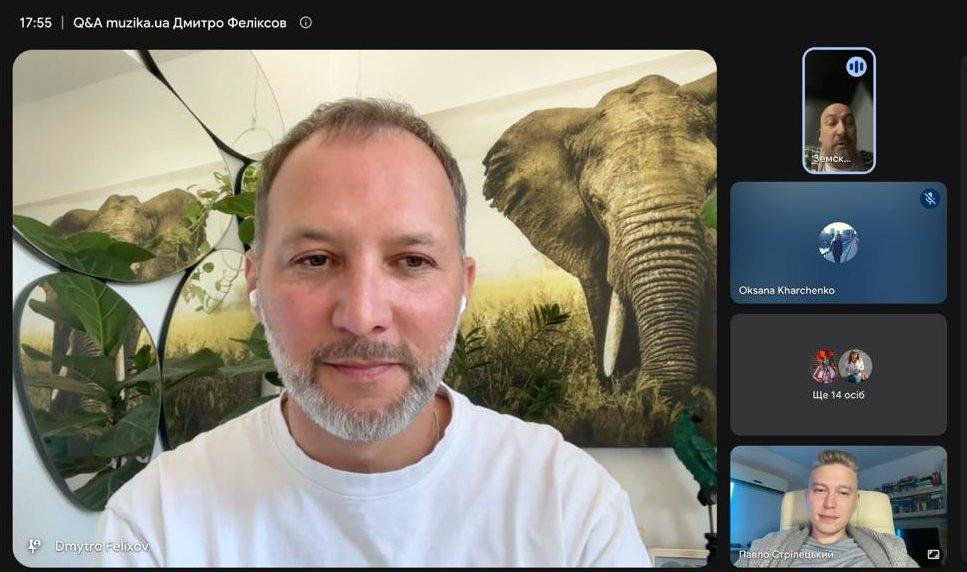
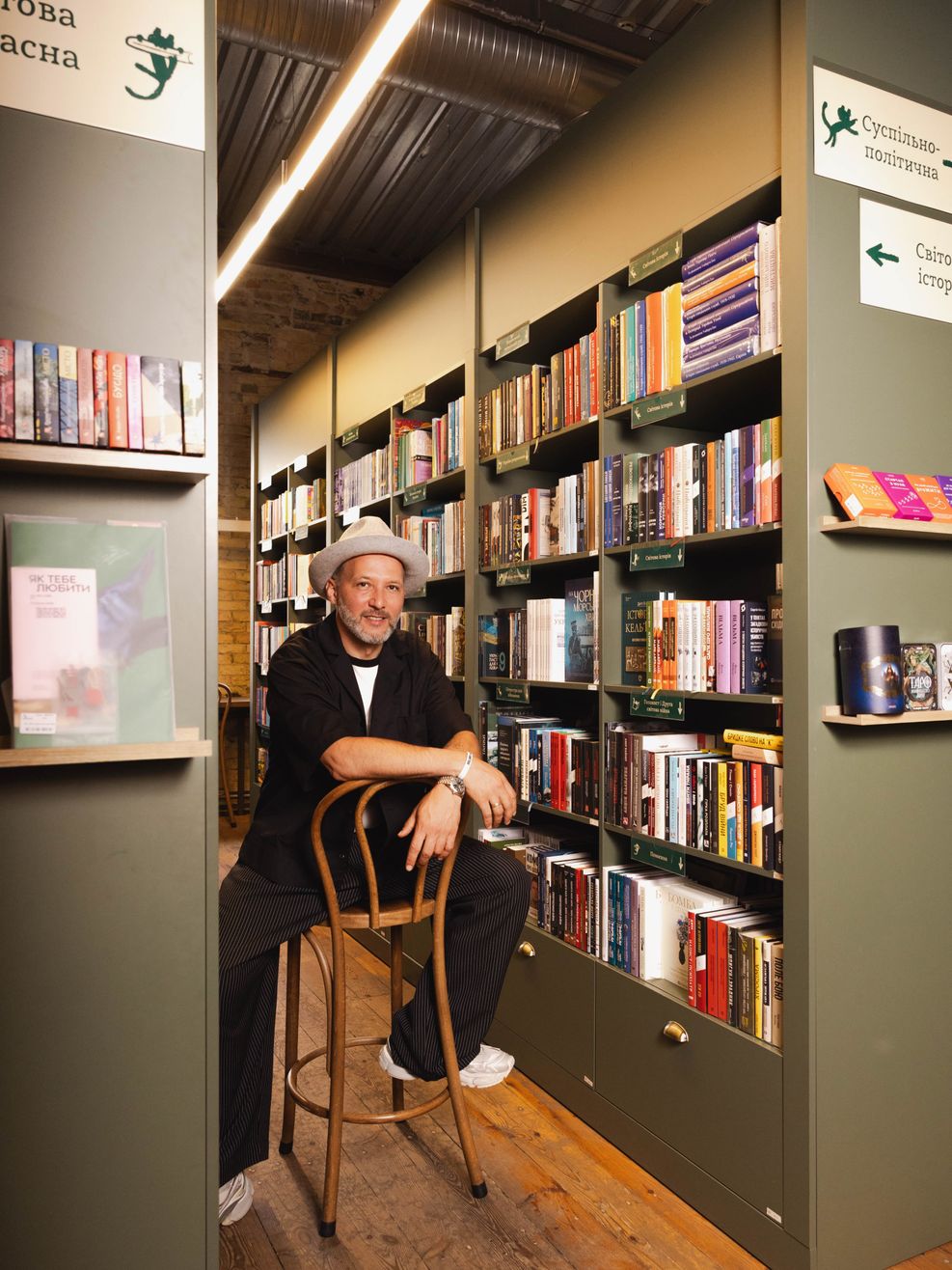
Dmytro Feliksov is a Ukrainian entrepreneur and the founder of Concert.ua, Readeat, BookTicket, and Origin Stage. He has worked in culture, entertainment, publishing, and digital services for more than 27 years, creating technological products and infrastructure for these markets.
Notes from the online meeting dated 24.09.2026
Is there a “right” number of songs for a solo concert?
No, there is no universal number. The number of songs by itself does not determine readiness for a solo concert. What matters more is not how many tracks have already been released, but what effect they have on the audience.
A concert begins not with a mathematical count of the repertoire, but with whether the material has hit potential. It is important that the songs do not merely exist, but make people want to hear them live, experience them in a shared space, and feel them in the format of an event.
Dmytro stressed that there are songs people are happy to stream, but not necessarily go to a concert for. And there is the opposite — material that creates strong concert energy and on its own generates interest in a live performance.
As an example, he mentioned Klavdia Petrivna: her major concerts became possible not because there was some “correct” amount of repertoire, but because interest in the artist and in the songs was already high at the time of the announcement. In other words, it was not only the songs that mattered, but also the image, the intrigue, the anticipation, and the audience’s emotional demand.
How can you effectively promote and sell concert tickets?
There is no single universal formula here — everything depends on the scale of the event, the audience potential, and the artist’s own level. But there is one basic condition without which promotion hardly works: the artist must be as involved as possible in the process.
This is not just about formal consent to the concert, but about real participation in its preparation. The artist should:
- want this event;
- be involved in creating it;
- coordinate social media and announcements;
- treat the concert as a priority event in the near term.
Dmytro stressed that if an artist is simultaneously living a separate life on social media, posting different content, taking ad integrations, and not synchronizing that with the concert announcement, it creates a risk for the entire campaign. In his view, in such a situation the promoter and the artist may be working in different directions, which reduces sales effectiveness.
Next, everything depends on the event format.
- For major artists, sometimes one powerful Instagram announcement with a direct ticket link is enough.
- For medium and small events, broader distribution is needed.
- In some cases, it is advisable to work with several ticketing operators at once.
Dmytro also noted that for small or unconventional events, it is important not to rely on only one channel. If the goal is to gather a specific number of people, you need to think not only about advertising, but also about the breadth of distribution, partnerships, local communication channels, and real access to the audience.
Another important point is that the artist and the promoter may have different goals. For the artist, a concert may be about a creative breakthrough, image, and content, while for the promoter it is about recouping investment and financial results. That is why all key agreements should be discussed from the outset.
So, effective ticket sales are not just about advertising. It is a combination of:
- the artist’s involvement;
- a clear goal;
- the right distribution;
- coordinated communication;
- an understanding of the event’s scale and audience.
What are the main mistakes artists make when organizing their first concert?
The very first and most common mistake is setting the wrong goals.
Before the first concert, you need to honestly answer:
- why is this event being held?
- who is it for?
- what does the artist want to get as a result?
Dmytro emphasized that the first solo concert is usually not about earning money, but about other important things:
presenting yourself as an artist;proper positioning;creating a strong first impression;building up photo, video, and media materials;marking a new stage in your creative work.
Another common mistake is mismatched expectations between the artist and the promoter. The artist may have one goal — creative, image-related, or emotional — while the promoter has a completely different one, for example to recoup investment or make money. If this is not discussed at the start, it is easy to end up with dissonance and conflict after the event.
It also becomes a problem when the artist tries to think on the scale of a large venue right away, without having the budget, the audience, or the experience. Dmytro advised not to jump straight to the Palace of Sports, but to start with smaller formats and move gradually.
So, the main mistakes in a first concert are:
- an unclear goal;
- wrong expectations;
- trying to make the event too big right away;
- lack of agreement between the artist and the promoter;
- underestimating the budget and organizational complexity.
Where can costs be reduced in concert organization, and where does cutting costs become dangerous?
Dmytro Feliksov warned against the approach of putting on an event without a real budget, expecting expenses to be covered by ticket sales. In his opinion, this is a very risky model, because sales may not meet expectations, while the event will still need money here and now.
First and foremost, he recommends understanding the budget structure first, and only then thinking about where costs can be optimized. In other words, it is important not just to look for what can be “cut,” but to see the event as a holistic project with specific goals, risks, and financial boundaries.
At the same time, there are things you should not save on, because they directly affect the quality of the event:
- the program;
- sound;
- lighting;
- the overall level of delivery of what is promised to the audience.
If a concert is billed as a serious event, but the stage, equipment, or presentation look weak, it hurts both the artist and the promoter. That is why Dmytro emphasized: you cannot save in a way that destroys the very essence of the event.
At the same time, he advised starting with smaller formats if the budget is limited. This allows you to:
- avoid excessive risk;
- test your audience;
- gain experience;
- gradually increase the scale.
His example was very practical: instead of immediately trying to fill a large venue without the resources, it is better to do an intimate event for 50–100 people, see the real response, and only then raise the bar.
If an artist or team is putting on a first event, where do they get the necessary experience, and how do they avoid getting lost in the technical and organizational nuances?
Don’t try to figure everything out on your own right away if this is truly your first event. In Dmytro’s view, at the start it is more important not to “become an expert in everything,” but to find an environment where the necessary expertise already exists.
The best way is to work alongside people who have already done similar events, or at least go through this path in a team that has an experienced venue, promoter, or technical crew. In other words, don’t invent everything from scratch, but rely on existing practice.
Dmytro separately emphasized that for the first step, it is not so critical to dive into choosing lighting, sound, technical contractors, or logistics yourself. Much more important at the start are:
- understanding the goals of the event;
- honestly assessing the budget;
- defining the format;
- finding people who can advise and guide you through the process without critical mistakes.
He also advised, if possible, to work on someone else’s side — that is, to gain experience by observing how events are done from the inside. This gives much more benefit than trying to control everything on your own right away.
How critical is it to understand lighting, sound, and technical contractors yourself if this is your first event?
Dmytro believes that this is not the main strategic question at the beginning. Yes, contractors are important, but at the first stage it is more important to understand the event’s goals, budget, and your own capabilities. If there is no experience, it is better not to build everything on ambition or ego, but to rely on people who have already run more than one event.
If the artist still doesn’t have a large audience, does it make sense to launch the first small events yourself?
Yes, and Dmytro Felyksov considered this one of the healthiest ways to start. In his view, a small event is not a “less valuable” format, but a real way to test yourself, your music, and your audience.
He repeatedly stressed that you shouldn’t try to jump straight into a large venue without a budget, experience, or clear demand. Instead, it’s better to start small — say, with a format for 50–100 people — and see how the audience reacts to the live performance.
Such first events immediately give several important things:
- a real understanding of whether there is demand;
- first experience of the stage and organization;
- an opportunity to see how people perceive the artist live;
- a starting point for building trust with the professional market;
- a foundation for the next, bigger step.
Dmytro emphasized that if an artist can independently gather even a small room, that is already a strong signal. This format allows you not only to test your own strength, but also to gradually build confidence. First 50 people, then 100, then 200–250 — and only after that does it make sense to think about a bigger scale.
What does a venue or promoter look at when deciding whether to work with an artist?
In such decisions, trust, experience, and predictability are the most valuable. For a venue or promoter, it is important not only how creatively interesting the artist is, but also whether it will be comfortable and safe to work with them at every stage of preparing and staging the event.
First and foremost, they pay attention to:
- the reputation of the artist or team;
- experience from previous events;
- understanding of the format of the upcoming concert;
- the ability to resolve difficult situations without conflict.
Dmytro emphasized that any collaboration is a process of mutual “feeling out” each other. At the start, the parties may not yet know one another, so it is important to quickly understand whether there is a shared vision, whether everyone is ready to move forward, and whether chaos will not arise in the process.
Separately, he showed that for a promoter it is important not only “who the artist is,” but also what kind of event it will be. If it is clear that the team is adequate, the goals are realistic, and the risks are controlled, then the collaboration has much higher chances of success.
How do copyright payments work at concerts, and who should bear responsibility for royalties?
This is a major institutional problem that still has no full systemic solution in the Ukrainian industry. Formally, it concerns the payment of a percentage of the total ticket sales from the event, but in practice there is a lot of confusion, mistrust, and misunderstanding around it.
He stressed that responsibility for such payments usually lies with the event organizer, not only with the venue. It is the organizer who works with ticket revenue, so that is what the calculation base is based on.
According to Dmytro, the problem is not only in the law, but also in the lack of a culture of transparency. The market constantly faces the same questions:
- who exactly collects these funds;
- how they are then distributed;
- who actually receives them;
- whether it is possible to verify exactly how the collected money was used.
He gave an example: after paying copyright fees, a year later the question arises — how were they distributed? And if there is no clear answer to that, then distrust spreads to the entire system.
In Dmytro’s view, the market needs to move toward greater openness. Copyright organizations that collect funds should more publicly explain exactly how this money is spent and who receives it. Without this, trust between market participants will remain weak.
What should you do if an event is endangered by mourning, an air raid alert, a security situation, or some other force majeure?
In the concert industry, such risks need to be built in from the outset, not reacted to after the fact. An event can go off plan at any moment, so the key task of the organizer and the artist is to be prepared for this even before sales and announcements start.
First of all, it is important to:
- monitor official recommendations promptly;
- follow safety rules;
- make quick decisions about postponement or format changes;
- have a ready communication plan for the audience;
- not delay notifying attendees.
Dmytro emphasized that in such situations, quick contact with the audience is crucial. If the event is postponed or changed, people need to find out as soon as possible — through social media, ticketing services, and other channels where contact details are already available.
Artists are people too, but they are expected to respond in a timely manner. If the situation requires it, it is important to have a civic position, be consistent, and not ignore what is happening. Silence can also be perceived as a position, so it is better to clearly understand exactly what you want to say to the audience.
Is there a “correct” rider, and what should it contain so that it works not as a formality, but as a real working tool?
The rider must first and foremost be realistic and structured. It should not turn into a list of whims or a document that cannot be implemented in real conditions. This is especially important in Ukraine, where every additional requirement directly affects the budget and the complexity of organization.
Usually, a rider consists of two major parts: 1. Technical — sound, lighting, stage, equipment, backline; 2. Household — logistics, accommodation, catering, transfers, and living arrangements for the team.
Dmytro emphasized that in a rider, not only detail but also adequacy matters. If the team can get there faster, easier, and cheaper, without losing quality, that is worth discussing. In other words, the rider should not be “stone-like”; it should remain workable and flexible.
He also emphasized separately that an artist should be demanding, but restrained. Excessive or unreasonable points can not only increase costs, but also damage reputation. A rider should help ensure a quality performance, not become a cause for conflicts or memes.
So, a good rider is one that:
- clearly describes the artist’s needs;
- is realistic for the specific event;
- does not burden the budget with unnecessary requirements;
- helps organizers prepare the performance without chaos.
How do you understand that a concert or event was successful, and what exactly creates a good impression for the audience?
A good event is one where the promise is fulfilled and preferably even a little more. That is, the audience comes with certain expectations and leaves feeling that they received not just what they paid for, but also additional emotion, atmosphere, and experience.
For the audience, the following things matter:
- that they get into the hall quickly;
- that they do not stand in line for too long;
- that they get a strong impression from the show;
- that they feel the music, energy, and atmosphere of the event.
Dmytro separately emphasized that an event begins not when the artist steps on stage, but much earlier — at the entrance. Queues, security checks, cloakroom, waiting — all of this is already part of the experience. If chaos arises at these stages, it can spoil the impression even before the concert itself.
For the organizer, a good event is not only a full hall, but also a balance between two sides:
- that the artist is satisfied;
- that the audience leaves feeling it was worth it.
Another important element is integrity. The event should be perceived as a complete creative act, not as a set of random decisions. That is why strong contractors, a suitable venue, quality technical production, and directing are important.
Dmytro also emphasized the role of the show. It is what creates that same “wow” effect that makes people come back again and recommend the event to others. But the show does not replace the basics: if there is poor organization, queues, or weak service, that can undo even a strong performance.
What helps an artist turn audience attention into real concert demand and ticket sales?
There is no quick magic here — consistency works. An artist must treat creativity as work, not as random bursts of inspiration. If the goal is to gather an audience for a concert, then that requires not one successful post, but regular and consistent work.
According to him, it is important:
- to release material systematically;
- to work constantly with the audience;
- to maintain interest around oneself;
- not to wait until “inspiration strikes.”
Dmytro emphasized that one hit can give a strong start and even attract a lot of attention, but without systematic work it does not turn into a long concert career. You need not just to catch the wave, but to hold it: build presence, stay in touch with listeners, consistently release new material, and keep reminding people about yourself.
How realistic is it to move major festivals from Kyiv to Lutsk, Lviv, or Chernivtsi?
Such relocation is already happening in part and in many cases can be a completely realistic solution. Dmytro gave examples of festivals that changed city or venue, and emphasized that the market is already adapting to new conditions.
At the same time, he drew attention to an important nuance: it all comes down to economics and market capacity. Kyiv still remains the largest platform in terms of people, sales, and financial potential. If Kyiv drops out of this scheme, it can affect not only the festival itself, but also the entire touring model around it.
So relocation is possible, but it is not a universal recipe. For a festival to really work in a western city, you need to consider:
- whether there is enough audience there;
- whether people can get there;
- whether the event’s economics allow it;
- whether part of the potential demand is lost because of the location change.
If the venue simply publishes a poster, is that enough to sell tickets and fill the hall?
No, usually that is not enough. A poster published only on the venue’s page is not a full-fledged promotional campaign, but merely one of the possible tools. A successful event starts with all parties agreeing at the outset who does what:
- what the artist takes on;
- what the promoter does;
- what role the venue plays;
- whether the venue has additional resources, channels, or a community;
- whether those resources can be used for real promotion rather than just a formal announcement.
Dmytro emphasized that if the venue has only an Instagram or Facebook page and at most can post the poster, then that is something, but not everything that can be done. If the venue also has an audience, local channels, partner connections, or the ability to help with advertising, that should be discussed separately and brought in.
He also noted that sometimes you need not only to ask for a post, but also to negotiate additional involvement in promotion, including financial involvement. Because simply “providing the hall” does not mean making the event successful.
Another important point: if the event takes place in another city, it is very important to know the local context — where the audience hangs out, which Telegram channels people read, where posters can be placed, and with whom it is worth cooperating locally. And it is often the venue or local partners who can suggest these things.
So the answer is simple: yes, you can, but you should not rely solely on the venue. Its strength is only part of the whole system. For the event to really work, joint actions by the artist, promoter, venue, and, if necessary, local partners are needed.
If only a few days remain before the concert and sales are still below plan, is it right to give away free tickets to fill the hall?
Dmytro Feliksov said that he does not like the practice of free “top-up” tickets to fill the hall. In his opinion, this creates the illusion of success but does not solve the problem in essence. The hall may look full, but that does not mean the event really worked as a market case.
At the same time, he acknowledged that in certain situations organizers may take such steps if they see that otherwise the event will look completely empty. But this must be a deliberate crisis-management decision, not standard practice.
Why he treats this cautiously:
- it can create self-deception for the artist and the team;
- audience members who bought tickets may feel it is unfair;
- reputationally, it is not always beneficial;
- such a scheme does not give an honest understanding of real demand.
In fact, Dmytro emphasizes: it is better to honestly accept that the event did not achieve the expected result than to disguise it with free invitations. Sometimes it is more important to preserve trust and understand the reasons for weak sales than simply fill seats in the hall.
So, the short answer is this: sometimes it can be a forced step, but as a strategy it does not work and can harm the reputation and an honest understanding of the market.
Is the show really so important that it can influence a person's decision to come to a concert again, and not just the music itself?
The show matters very much, but it does not replace the music — it amplifies it. It is the show that creates that same effect of "magic" or "wow," thanks to which the event is remembered and makes you want to come back again.
In his opinion, people come to a concert not only to hear songs, but also to feel a holistic emotion: the atmosphere, energy, direction, dynamics, and visual presentation. If an artist can bring all this together into one strong event, it works much better than just a set of performed tracks.
At the same time, Dmytro did not place the show above the basic quality of organization. For him, it is important that:
- there is good sound;
- there is no chaos in the queues;
- the event starts more or less on time;
- people feel comfortable;
- everything works as a cohesive experience.
That is, a show is not only special effects, light, or smoke. It is also the direction of the whole evening, when the stage, the music, the artist's delivery, and the audience's reaction come together into one strong emotional act.
Dmytro separately noted that if an event does not have a strong show, that does not mean it is a failure. But then it has to compensate with other things: the quality of the music, the atmosphere, the honesty of the delivery, and a strong connection with the audience.
So, his conclusion is this: music is the foundation, and the show is what turns a concert into an event that people want to remember, discuss, and repeat.
What does Dmytro see as the future of the concert industry in Ukraine, especially under the conditions of war and an unstable market?
Optimistically, the concert industry will not disappear, but its format will inevitably change under the influence of war, security risks, and the overall economic situation.
He believes that the market is already going through a transformation. What used to be the usual model of cooperation between artist and promoter no longer works as stably as before. In particular, the model where:
the artist receives a fixed fee;
and the promoter bears all the risks,
— no longer always corresponds to reality. Due to the security situation, events may not take place not because of someone’s mistakes, but because of circumstances no one can influence.
That is precisely why Dmytro believes that in the near future a more flexible model of cooperation should emerge, where the artist and the promoter share not only the result but also the risks. In his opinion, this is much fairer and more appropriate for the current conditions.
He also emphasizes that:
- events are not going anywhere;
- audiences will still want live performances;
- the market will find new forms and new concert formats;
- the industry will continue to adapt, as it already did during COVID and at the beginning of the full-scale war.
Separately, Dmytro points out that the future of concerts will depend not only on safety, but also on how well market participants learn to think like partners rather than as sides that shift risks onto one another.
What is the main takeaway for an artist?
Very pragmatic: do not wait for the perfect moment, but work systematically. Dmytro emphasized that it is important for an artist not to live in a mode of inspiration or occasional bursts, but to build creativity as regular work.
To do this, you need to:
set realistic goals;
understand why each event is being done;
calculate the budget and risks;
agree with partners at the start;
be involved in your own promo campaign;
not be afraid of small steps at the beginning.
Separately, Dmytro stressed that it is important for an artist to have a civic stance and principles they are ready to defend. In the current conditions, this is part of professional and human responsibility.
His takeaway for an artist can be reduced to a simple formula: creativity must be systematic, and a concert career — consciously built, not assembled by chance.
Author: Dmytro Feliksov