PR for an independent artist: what works today, and what no longer does
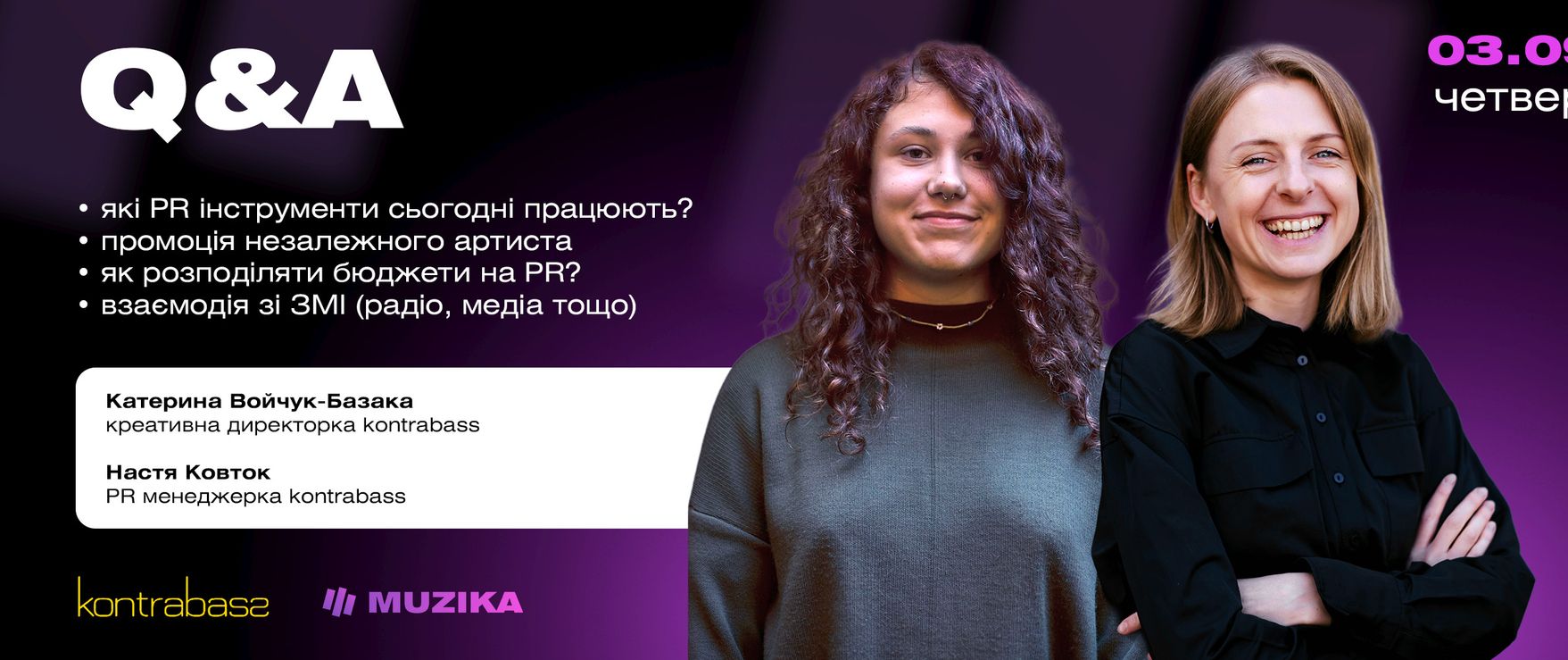
kontrabass – a music agency that promotes quality Ukrainian indie music. The organization includes a label, a concert department, a booking department, and a communications division that oversees the promotion of all artists in the agency ecosystem. We work with artists such as The Unsleeping, Pyrig i Batih, Stas Korolyov, Struktura Shchastia, and others.
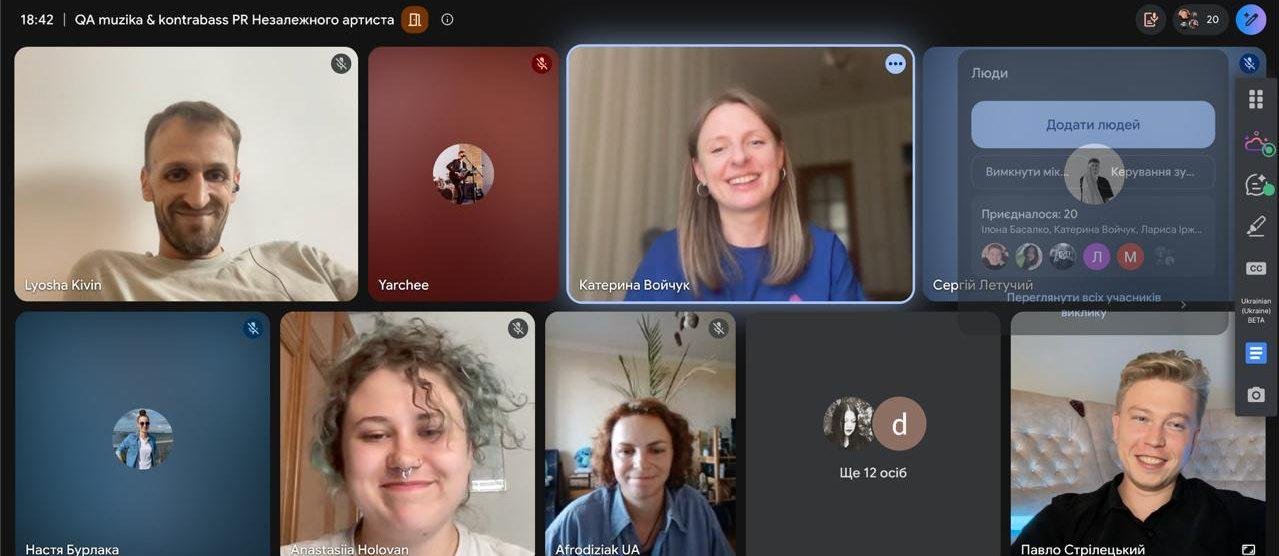
Notes from the online meeting of 03.09.2026
How PR, marketing, and communications differ
Marketing is the work with the product: the track, cover art, video, live performance, packaging, and delivery channels to the listener.
Communications are the tools that help you find your audience: content, targeting, pitching, collabs, media.
PR is long-term work on the artist’s reputation, image, and brand resilience.
The main point: PR cannot exist separately from the artist’s strategy. If there is no understanding of who you are, where you are going, and who you are making music for, then communications will also be chaotic.
Which tools no longer work
Among the most risky and harmful approaches, the speakers named:
- fake views, followers, and streams;
- artificial inflation of statistics;
- buying questionable playlist placements;
- blindly copying hype formats without adapting them to the artist.
The reason is simple: the audience quickly sees through fakery. If the numbers do not match reality, trust drops, and in some cases accounts can even be blocked.
What is more effective: one big splash or regular presence?
The answer depends on the scale of the artist and their goals. But the general conclusion is this:
1. for building a brand, frequent but precise communications work better;
2. one big media hit can have an effect, but only if there is a plan for how to build on it;
3. without further systematic work, any splash quickly fades.
In other words, not only the appearance itself matters, but also what the artist does after it.
How to build a long-term PR strategy
Kateryna explained that a PR strategy should be based on the project’s own strategy. To do this, you need answers to the basic questions:
- what the project’s mission is;
- what the vision is;
- what your goals are for 1–3 years;
- what you are and what you are not;
- what your positioning is;
- what messages you are conveying.
After that, the strategy is broken down into stages:
- Analysis of the project’s goals and current state.
- Research into the market, the information landscape, and the context.
- Forming the artist’s image and communications framework.
- Choosing channels and messages.
- Building a plan for several months ahead.
A PR strategy does not work “in reverse”: you cannot simply take a tool that worked for someone else and expect the same effect without taking your own goals into account.
Why it is important not to be detached from the context
At the meeting, they also emphasized separately that the artist and their team must understand not only trends on social media, but also the broader context.
Here it is important to take into account:
- what society is feeling right now;
- which messages are appropriate and which are triggering;
- how the communications market has changed in recent years;
- which technical nuances can no longer be ignored.
The idea is not to “adjust” to everything, but to not look detached from reality.
Real-world cases from kontrabass practice
The Japanese band heavenphetamine
This is an example of how you can build a cohesive image around one distinctive feature.
At first, the focus on the fact that this was a Japanese band worked. But later the team began expanding the story:
- stories about culture shock;
- the context of a Japanese artist’s life in Ukraine;
materials about musical and literary influences;
- local interviews and small publications.
As a result, a cohesive image came together, which over time began to work for tours and recognition.
The band The Unsleeping
This is an example of a different approach: the band rarely releases music, but has a consistently formed image and value platform.
What the team does:
- maintains consistency of image;
- adds new elements to an already familiar story;
- updates the visual language;
- works for the long haul, not just for one release.
Conclusion: even if an artist appears rarely, they can remain recognizable if the project story develops consistently.
A random boost through a series
We separately mentioned the case of the band Pyrih i Batih, which remained niche for a long time but saw a sharp rise after the track "Gai shumliat" was used in a series.
The lesson here is simple: chance can give a big push, but only if you already have:
- quality material;
- a ready catalog;
- a team that can quickly ride the wave;
- performance and communication experience.
How to allocate a small budget: $300–500
For a beginner with a limited budget, the speakers advise investing money first and foremost not in magic buttons, but in the foundation.
Budget priorities
Content — high-quality reels, shorts, video formats that can be scaled.
Artist presentation — profile design, bio, visual consistency.
Niche coverage — small media outlets, bloggers, thematic communities.
Targeted ads — only if the product already looks convincing.
What is better to avoid:
- expensive playlist placements;
- launching ads for a weak or unfinished product;
- mass mailings without personalization.
The key idea: a small budget should work toward building a base, not a one-off effect.
Playlists: what you should know
Let's recall that there are two types of playlists:
Editorial — curated by platforms; you can submit through distributors and labels.
User-curated — created by people who curate their own selections.
Editorial playlists depend on the quality of the product, metadata, pitching, and the artist's overall activity. User-curated playlists depend on how relevant the track is to the playlist's style.
Is it worth buying placement in playlists?
The experience of kontrabass showed that this is a risky story. They had cases where, after purchasing placements, artists' accounts were blocked.
Conclusion:
- placements should be bought only cautiously and if this is not the main budget;
- it is important to check whether the playlist is organic;
- the track must fit the context of the selection.
How to communicate with media and bloggers
For letters not to get lost, three things matter:
- consistency — not one letter, but a systematic presence;
- personalization — it should be clear that you are addressing this specific person;
- genuine interest — it is worth knowing what the media outlet or blogger is focused on.
The advice is simple: don't start the contact with a template-style self-promotion. It's better to start from the real context: mention a recent post, work, topic, or event.
Do you need a PR manager for a short release cycle
Yes, it can be effective. Especially if you need to:
- amplify a specific release;
- do targeted promotion;
- prepare mailings, pitching, and communication materials;
- build visibility over a short period.
But long-term PR management provides a much broader effect, because it works not only for a news hook but also for reputation overall.
How to promote a musician if music is still a hobby
The speakers emphasized: the tools for such an artist are the same as for everyone else. The difference is only in scale and priorities.
What matters:
- either set aside time and resources systematically;
- or find a team that will help do it;
- don't expect everything to grow by itself if the project remains at the hobby level.
If music is meant to become a life's work, it must receive the appropriate level of attention and investment.
OSINT and open sources in PR
In the work of a communications specialist, open sources are very important. They are used for:
- analyzing the artist's social media;
- checking media mentions;
- studying brand history;
- looking for similar cases around the world;
- assessing risks and context.
In fact, this helps understand how the artist looks from the outside, what has already been done, and where to move next.
Soundtracks, films, games: how to get into catalogs
Pitching to films, series, or games is a separate direction that only makes sense when there is a proper music catalog.
What helps:
- sorting tracks by genre, vibe, and emotion;
- working with agencies and production companies;
- direct contacts with music supervisors and directors;
- readiness to quickly provide a selection for a specific request.
If the music is background or atmospheric but fits the scene well, it is often easier to pitch it through agency contacts.
What language to use on social media
For instrumental music, language is not the main factor. What matters more is your goals.
If you want to grow in Ukraine, it makes sense to communicate in Ukrainian.
If you have ambitions to go international, you can duplicate content or create some of it in English. The speakers advise switching to another language only once there is at least a small flow of foreign audience or the first international signals: a playlist, views, comments, or stats.
Is it worth copying someone else’s content
The position was balanced: blind copying doesn’t work, but drawing inspiration from successful formats is normal.
You need to:
- understand your own image;
- know exactly what you want to say;
- adapt the format to yourself;
- not lose your uniqueness.
One strong case showed that even a trending format can be used effectively if it is organically woven into the artist’s style.
How to enter the music industry
A separate block focused on internships and the first job in the industry. The main advice: not to wait for the perfect start, but to go where you can learn in practice.
What works:
- apply for internships;
- help projects that are close to you;
- work with a band or artist in a manager role;
- build a portfolio before your first job.
Even if you don’t have a relevant education, it’s not critical. Many people on the kontrabass team took exactly that path.
Key takeaways from the meeting
PR for an artist is a long game, not a one-off spike.
Without a strategy, there will be no effective communication either.
It’s better to invest a small budget in content and image rather than in dubious playlists.
Personalization and sincerity work better than mass mailings.
It’s important not just to copy trends, but to adapt them to yourself.
The best results come from consistency: a series of releases, a regular presence, and a coherent image.
In short: content, context, reputation, and consistency are the foundation without which PR doesn’t work.
Author: kontrabass & Pavlo Striletskyi