AI Content Labelling: New Distribution Rules for Artists, Managers and Labels

The music industry is entering a new phase of interaction with artificial intelligence. Streaming services and digital platforms are gradually tightening control over the authenticity of uploaded materials. Starting August 2, 2026, mandatory transparency rules apply to content created or modified with the help of artificial intelligence for all materials submitted for distribution (audio, cover art, video).
Why distribution rules are changing
The changes in requirements are driven by shifts in the global digital market and legal framework:
European Union requirements (EU AI Act): Regulatory provisions of the Artificial Intelligence Act have come into force regarding mandatory transparency for content created or substantially altered with the help of AI. Failure to comply with these rules carries legal consequences.
Platform policies: Digital services (Spotify, YouTube and other platforms) are constantly reviewing and strengthening their own rules. Streaming services are inspecting content with synthetic elements more closely.
Direct responsibility of the distributor: As the distributor, the service is responsible for ensuring that materials received from artists and passed on to streaming services comply with their current technical and legal standards.
Risks for materials: Any release without proper labelling may be rejected, blocked, or removed by the services. Failure to meet the requirements leads to publication delays and tracks being taken out of circulation.
4 mandatory steps before submitting a release for distribution
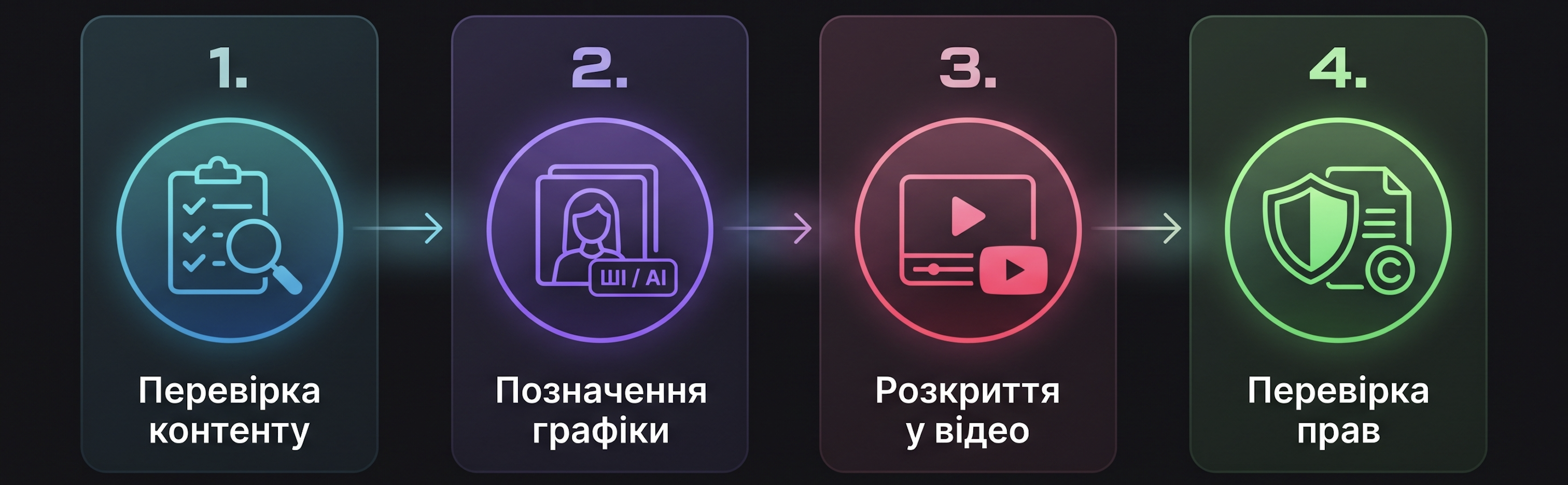
To ensure releases reach platforms on time, without publication holds or technical rejections, be sure to complete four basic actions before uploading materials:
Check the materials: Determine whether the audio, cover art or promo video contains realistic generated or synthetic elements.
Label the visuals: Add a visible label to the cover or marketing graphic.
Prepare the video content: Integrate a permanent text badge directly into the video or activate a special disclosure mechanism on the platform (including in YouTube Studio).
Check rights and licenses: Make sure you have all permissions for every voice, image or intellectual property object.
1. What exactly falls under the new requirements
The transparency requirement primarily applies to so-called deepfake content — audio, visual or audiovisual materials generated or modified with the help of AI that resemble existing people, objects, locations or events and may be mistakenly perceived by the audience as real or authentic:
Artificial or cloned voice: Synthesized or cloned vocals/timbre of a real person or artist without proper identification and without their direct written consent.
Real person in fictional circumstances: An image or video of a living person in a context or situation that never actually took place.
Nonexistent person: A realistically generated visual image of a person who does not actually exist, but the material is read by the viewer as a photograph of a real person.
Concerts, performances and events: A generated or edited recording of a performance, event or live set that did not actually happen in real life.
Existing geographic locations: Generated or substantially altered locations shown in a distorted form that does not correspond to reality.
Any other realistic content: Images, audio tracks or videos that look authentic but were created or substantially modified by AI algorithms.
What is NOT considered a deepfake and does not require labelling
Using artificial intelligence tools in music production and design does not in itself make a release a deepfake.
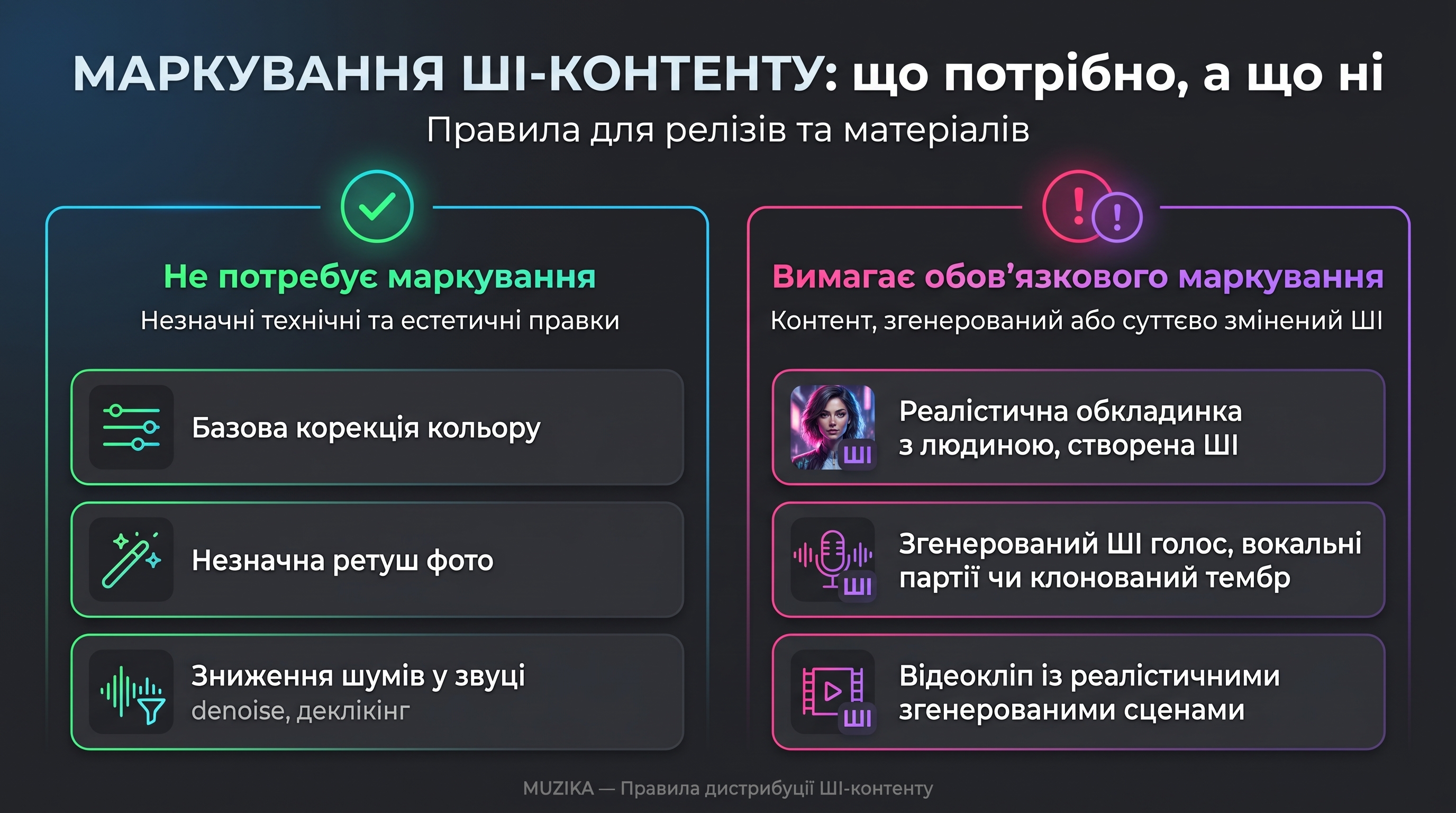
Please note: Any technical or aesthetic edits do not require labelling only when they do not alter the semantic meaning of the work and do not mislead listeners. All disputed and ambiguous cases are reviewed individually by moderators during the verification process.
2. Labelling covers and marketing graphics
All graphic materials subject to the transparency requirement (single/album covers, banners, promotional materials) must be labelled before being submitted for distribution.
The listener should immediately and clearly recognize the nature of the content:
“Generated by artificial intelligence” or abbreviated “AI” (“AI”) — for content entirely created by generative neural networks.
“Modified using artificial intelligence” — for original materials that have undergone substantial generative modification.
Technical requirements for the label on the image:
The text must be placed directly on the graphic.
The label must be clear, legible, and sufficiently contrasted against the background.
The label may not be obscured by other design elements (titles, logos, frames).
3. Labelling video materials
If you upload a music video, snippet or clip that is a deepfake or contains realistic synthetic content, you are required to make it identifiable to the viewer:
Permanent text badge in the video: Label “AI”, “Generated with the help of artificial intelligence” or “Modified with the help of artificial intelligence” must be continuously present directly in the frame throughout the entire video.
Exception for services with their own tools: Applying a watermark to the video content is not mandatory if the digital service provides its own separate mechanism for labeling AI content during publication.
4. Specifics of placement on YouTube
For video content uploaded to YouTube, a separate label on the video content is not required if the platform’s functionality is used:
Open the required video in YouTube Studio.
Activate the special disclosure feature for synthetic / altered content.
YouTube will automatically add the standard service notice for viewers.
5. Artist responsibility and legal rights
The presence of the label “Generated by artificial intelligence” does not legalize the use of someone else’s intellectual property.
By submitting a release for distribution, you bear full responsibility for:
Compliance with applicable national and international law.
Observance of copyright and related rights.
Rights to use a specific image, likeness, and voice.
Compliance with the technical and legal requirements of partner services.
Critically important: If someone else’s voice, face, or a fragment of a work is used in the track or video, you are required to have an official license, agreement, or written consent from the rights holder. Labeling with the “AI” tag does not replace legal documents.
Implementation procedure and consequences of violations
The requirements apply in accordance with the procedure for aligning standards with international services:
Releases from 2 August 2026: All new tracks, covers, and videos are submitted for distribution exclusively under the new labeling rules. Materials оформed in violation will be held back and returned to the artist or label for correction. If necessary, this also applies to materials submitted earlier for future dates.
Historical catalog (before 02/08/2026): The rules do not apply retroactively to previously published catalog, except in cases where the streaming platform itself requires changes to the data or labeling.
Further synchronization with the market: The distributor is in constant contact with streaming services regarding their specifications and promptly informs artists about new technical metadata standards.