How can musicians win over Gen Z and Alpha on social media
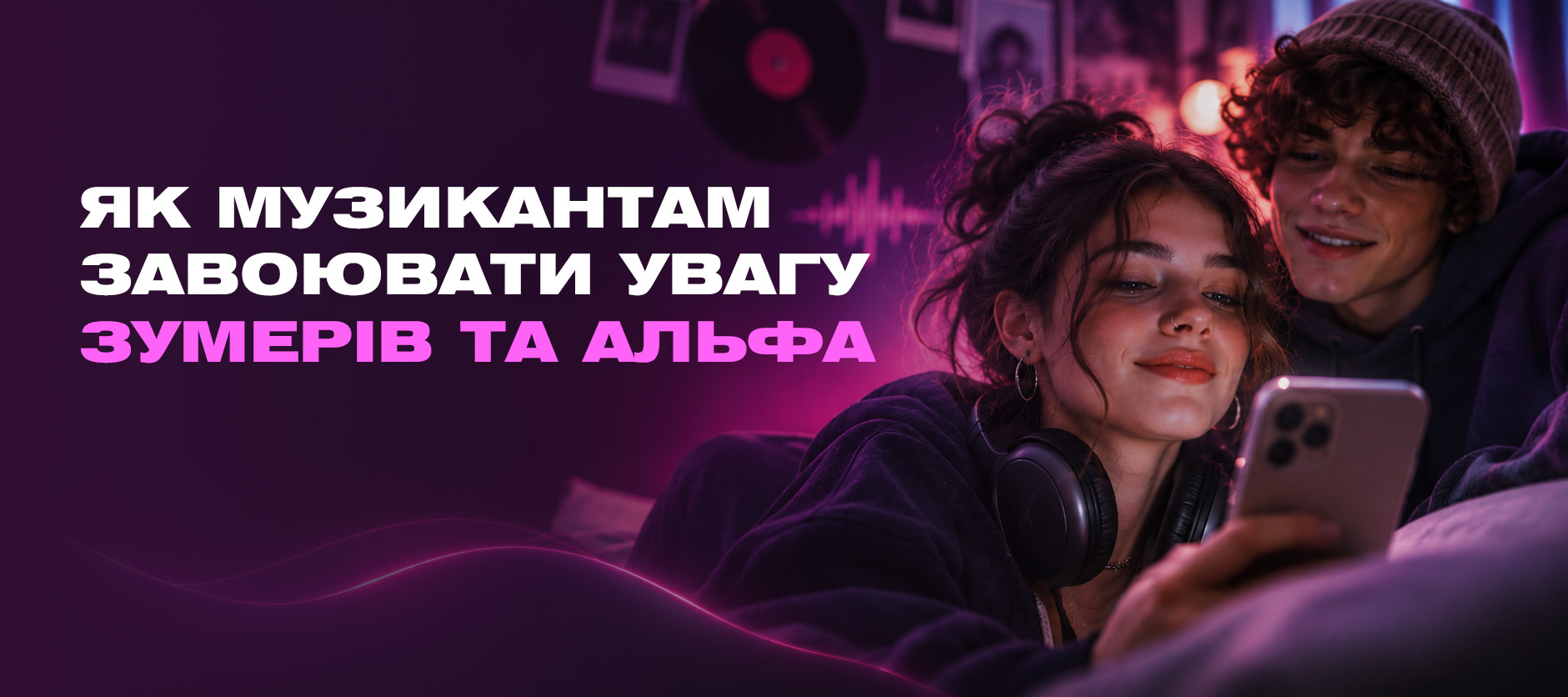
Gen Z (born 1997–2012) and Generation Alpha (born after 2013) are not just future listeners, but an active audience that is already shaping global music and digital content consumption trends today. The algorithms of leading social platforms are rapidly being recalibrated specifically to their behavior: if an artist ignores these rules of the game, they risk ending up outside the current information field.
The success of social media is always determined by young people: whether children choose their parents’ platform depends on its future. A telling example is Facebook, which failed to retain the younger generation and is now trying to hold reach around interest-based thematic groups. Meanwhile, Gen Z’s attention is focused in a completely different place.
Who are Gen Z and Alpha: what you need to know about the new listeners
This is a generation that grew up with screens in their hands and literally knows no reality without high-speed internet. Their information space consists of memes, vertical clips, dynamic content, and short-form videos on TikTok, Instagram Reels, and YouTube Shorts.
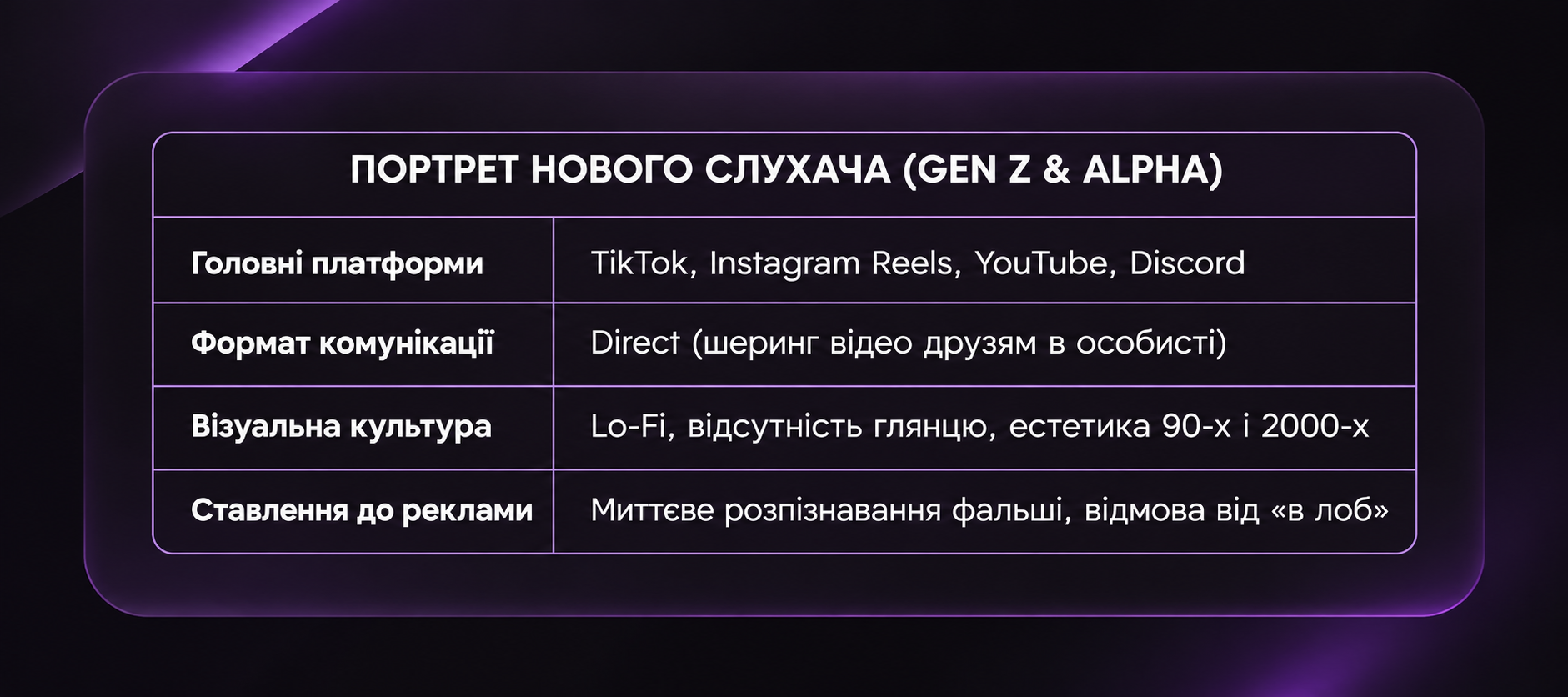
Key behavioral traits of the young audience:
An organic aversion to fakeness: They instantly detect insincerity, so the music product and communication must be honest and free of excessive gloss.
Priority platforms: They are not on Facebook; they are concentrated on Instagram, TikTok, YouTube, and Discord.
Interactivity instead of passivity: Polls, challenges, open reactions, and collaborations give the audience a sense of direct participation in the creative process.
Sharing via Direct: The main indicator of virality for Gen Z is the desire to send a video to a friend in direct messages. If a clip isn’t shared in Direct, the algorithms won’t pick it up as a trend.
Values-based choice: Gen Z are more willing to support artists who share their views — especially on social justice or environmental awareness.
A window of opportunity for new accounts: Gen Z spend a lot of time online, but they post less themselves because of intense competition for attention. Algorithms often support new pages, giving young musicians a real chance to quickly build organic reach.
They mock the “millennial pause” — millennials’ habit of remaining silent for a second after pressing the record button before starting to speak in a video, thereby showing the difference in how the digital space is perceived.
The vocabulary of authentic content: Lo-Fi, FGC and EGC
Overly polished marketing campaigns trigger banner blindness in Gen Z. To overcome this barrier, the industry is shifting to three key formats of sincere content:
Lo-Fi Content (Low Fidelity): Deliberately imperfect, living content without complex post-production or “plasticity.” A clip shot on a front camera in a hallway inspires far more trust than a staged studio ad.
FGC (Founder Generated Content): Content from the creator or project leader. For a musician, this means showing their own lifestyle, personal relationship to the tracks, and everyday challenges without the direct aggressive sell of “listen to my single.”
EGC (Employees Generated Content): Content from the people who create the project with you. This is behind-the-scenes material from session musicians, the sound engineer, VJ, or camera operator, revealing the real atmosphere of the studio or tour.
5 key principles for managing an artist’s social media
A young audience is drawn to naturalness. Listeners who are tired of manipulative campaigns prefer user-generated content (UGC), viral humor, and honest stories.
1. Prioritize TikTok and Instagram Reels
Short-video algorithms are the main free springboard for achieving viral reach. No new listener will wait for a full-length album: audience-building strategy starts with releasing singles and a series of supporting clips.
Instead of a standard announcement: release a teaser in the style of a trending meme or a situational POV video.
Instead of a classic premiere video: film a genuine reaction from random listeners or friends to the first verse.
Instead of a dry press release: show a snippet of an emotional vocal recording in the studio.
2. Loyal content instead of direct selling
Direct advertising in the form of “The track is out — hurry to the link in the profile bio” no longer delivers results. Content should be something people want to forward to friends or save for themselves:
Memes with your audio tracks: adapt the chorus or drop into a sound for creating external trends.
Lo-Fi live sessions: record an acoustic version or cover of your own track in an unusual place (on a balcony, in an elevator, or on the stairs).
Behind the Scenes: show how the demo was written, the lyrics were rewritten, and the production was assembled.
UGC waves: encourage fans to make their own videos with your track — challenges, dance moves, lipsyncs, or remixes.
3. The “content flywheel”: constant presence
Gen Z and Alpha don’t have the habit of staying focused for long on artists who release a project and disappear for six months. Contact must be systematic and continuous:
share work-in-progress snippets of tracks long before the official premiere;
announce concerts and tours through interactive stories (polls, surveys, Q&A sessions);
record alternative home arrangements of already released songs;
create duets and reactions to your fans’ videos.
What destroys engagement: a one-off post with an album cover and long silence afterward; glossy content without soul; posting purely “consumption” calls to action without dialogue with followers.
4. Nostalgia for an era they never saw
Gen Z are fascinated by the retro aesthetics of the 1990s and 2000s (Y2K), even if they didn’t experience that period themselves.
use VHS effects and film-camera filters while shooting;
style release artwork like old audio cassettes, vinyl, or CD boxes;
borrow the visual quirks of classic MTV TV shows from the early 2000s.
5. “The friend effect” instead of the image of an unattainable star
A new audience looks to musicians not for unattainable idols, but for like-minded people.
post casual conversational videos where you address the viewer like an old acquaintance;
show everyday life, creative chaos at home, and failed takes;
write tracks based on subscribers’ comments and film separate clips about it.
Money, behind the scenes, and long-form content on YouTube
Beyond the creative work, young people are interested in the reality of the music profession. Independent artists face the same everyday challenges as their listeners: fluctuating income, costs for recording, studio rental, promo campaigns, and travel.
Candid stories about investing in your own career, grant programs, budgeting, and the cost of music videos inspire respect: the listener sees that an artist’s success is not luck or the influence of wealthy producers, but daily hard work.
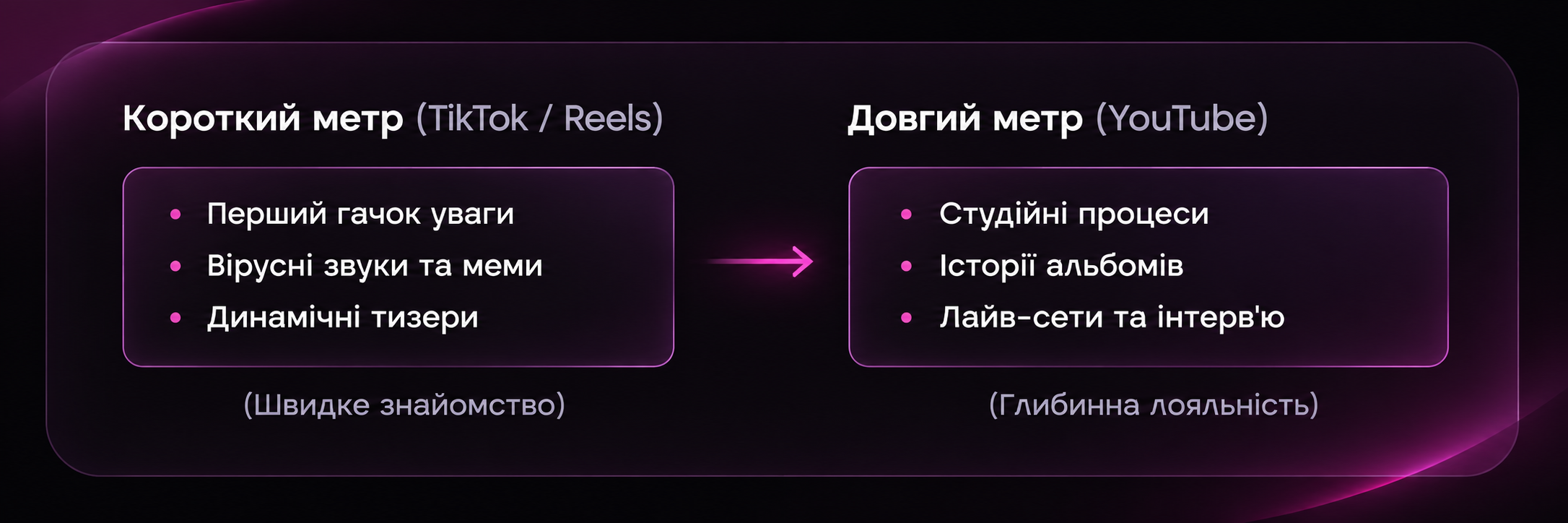
Gen Z consume not only short-form content: TikTok has taught them to filter information, but for deeper immersion they choose YouTube. It is a platform where millennials, Gen Z and Alpha generations intersect.
Today it is important not just to grab attention for a couple of seconds, but to make viewers watch the video through to the end: watch time has become the main success metric on platforms. If you do not yet have a developed YouTube channel of your own, it is useful to take part in podcasts, guest shows, and collaboration videos by other creators.
A modern musician’s social media is not a board for official press releases, but a constant live dialogue with the audience. More vertical video, an authentic Lo-Fi format, and involving fans in creating a track turn ordinary followers into a loyal community around your project.