Waterfall release: how this strategy works for artists
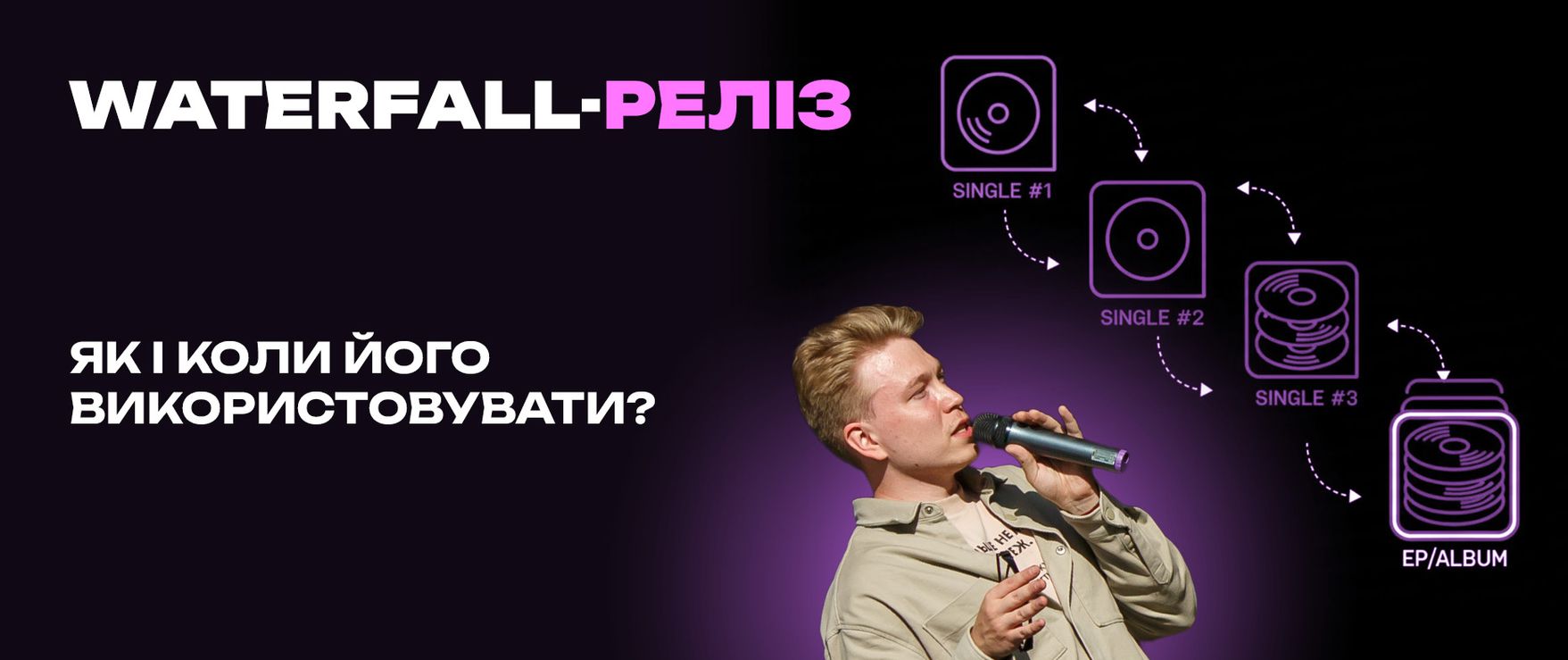
Waterfall is a sequential release of singles that gradually come together into one product (an EP or album), with each new track released together with the previous ones. This format works well for rolling out albums with a cumulative effect of streams and audience growth, but it is not for everyone and requires tight organization.
What is a waterfall release
A waterfall release is a strategy in which an artist releases tracks in stages, gradually building them into one release (an EP or album). Each subsequent release includes all the previous tracks.
Simplified scheme
Release 1: track A
Release 2: track A + track B
Release 3: track A + track B + track C
In the end, the listener sees one “growing” release that over time turns into a full body of work.
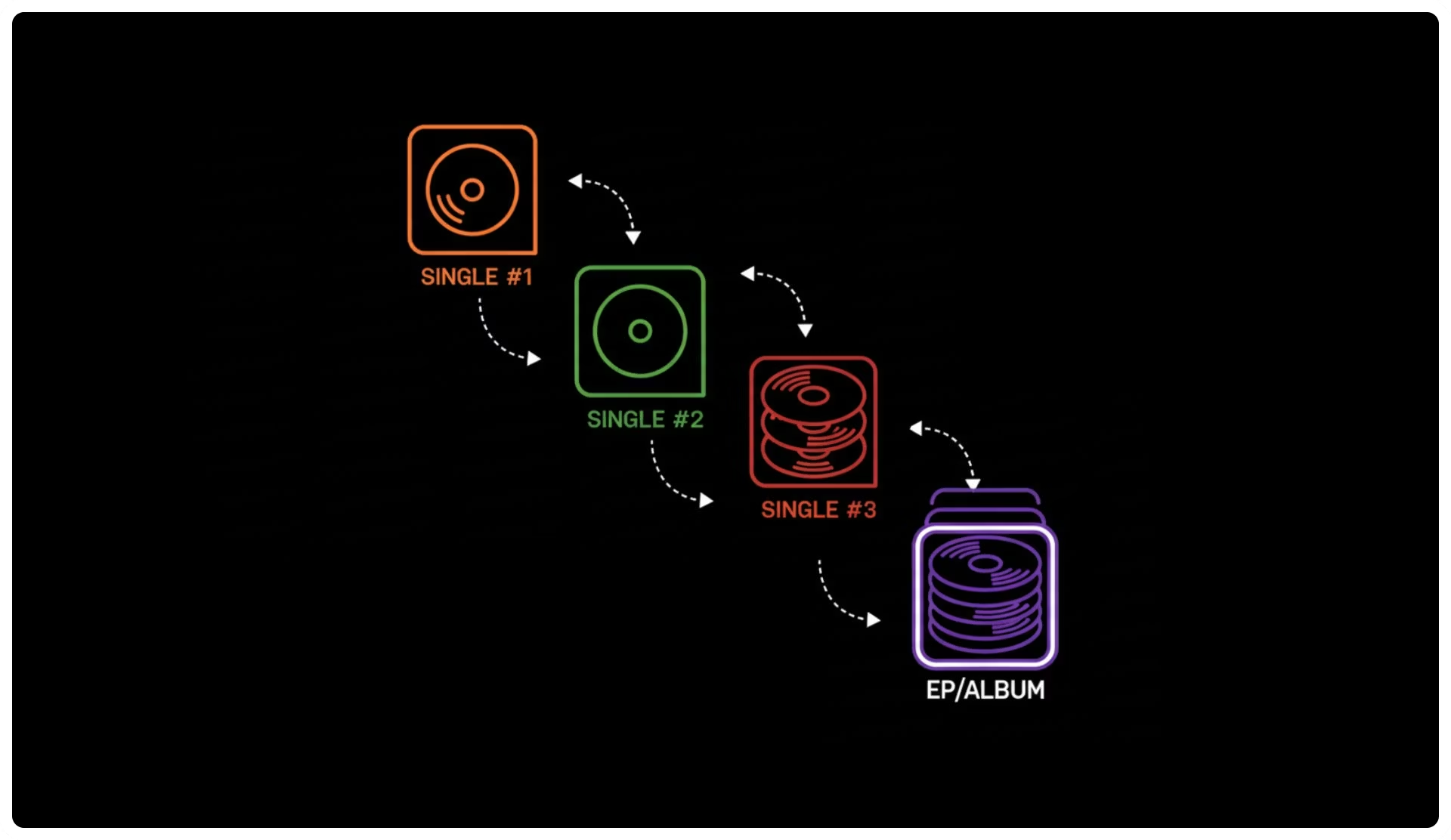
The idea is to avoid losing momentum between singles while at the same time directing streaming traffic to key tracks.
Benefits of the waterfall strategy
Accumulating streams
Each new track brings listeners to the previous ones. Streams, saves, and playlist adds accumulate within one release. This helps the strongest songs gain momentum in the catalog faster.
Ongoing activity in algorithms
Streaming services respond better to regular releases. The waterfall format helps you appear more often in active listeners’ Release Radar and sustain algorithmic playlist interest.
Release story and momentum
For conceptual projects, waterfall makes it possible to break the story into parts. Each release is a fragment of a larger work that leads up to the final EP or album release.
Using playlist momentum
If one track has taken off, the next singles within the same release can partly benefit from that momentum. Everything remains under one “umbrella” product that already has a history of streams and saves.
Here is a step-by-step guide on how to create a Waterfall in the personal account muzika-dist.com 👇👇👇
Risks and drawbacks: when waterfall can do harm
Listener confusion
If the cover art, titles, and presentation of releases hardly differ, part of the audience may decide it is the same release and simply skip the new track.
To avoid this, the new track must be clearly visible:
- updated cover art or a variation of it
- a clear emphasis in the release title and description
- clear wording in posts and mailouts stating exactly that a new track has appeared.
More complex metadata management
Each release update means new technical actions: UPC, ISRC, uploading through the distributor, updating the tracklist. If the team or artist works without a system, metadata errors can affect playlists, accurate royalty payouts, and catalog display.
Less attention from editorial playlists
Playlist editors usually focus on brand-new tracks. If waterfall additions look like reissues or “updated versions” of the same release, the chance of editorial support may decrease over time.
Not suitable for artists building big “moments”
If an artist’s strategy relies on separate major events — visual premieres, full PR campaigns, physical releases — it may be more beneficial for each track to have its own distinct release and campaign.
When waterfall makes sense
The waterfall strategy may be appropriate if
- you are an independent artist or a small label that bets on steady stream growth
- you release music regularly, and listeners are already responding to new tracks
- your goal is algorithmic growth and new discoveries in streaming
- you gradually lead your audience toward an EP or conceptual release.
When it is better to отказаться from waterfall
- you rely on major PR cycles, video premieres, media support
- there are long gaps between releases, and each drop is perceived as a separate event
- it is important for you that each song has its own separate campaign
- you focus on physical formats, collectors, and limited editions, where the release structure is different.
Is Waterfall still relevant, and how do you make a decision?
There is no universally correct option in this model. Waterfall can work as a tool for streaming growth, but only when it aligns with the artist’s overall strategy.
Before launching a waterfall, it is worth answering a few questions:
- do you want to build momentum through frequent releases or create separate, distinct “moments” for each song?
- are you and your team ready to keep metadata, the release schedule, and visual communication in order?
- does each subsequent track add something new to the release story, rather than simply filling out the tracklist?
On the muzika.ua platform, you will have a personal account where all your metadata will be stored, and you will be able to easily manage releases.
If the strategy is clear, and the calendar, visuals, and communication are prepared in advance, waterfall can become a workable format for streaming releases. If not, separate singles with full campaigns are often the safer option.