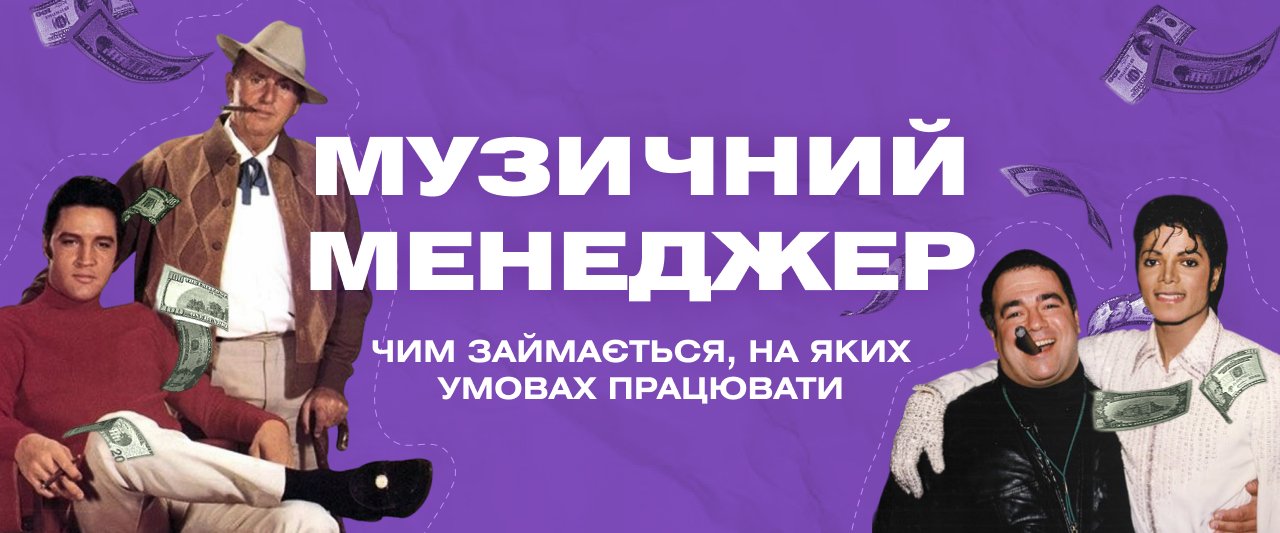
Music Manager: what they do and on what terms to work
I hope you’ve already had a chance to realize how much an artist has to do to promote their creative work? If you follow my blog on Instagram, then you’ve probably already been convinced that I’m not talking about easy success, but about real, total work. Because it’s important to understand that a music project is a business, and all the same business laws apply to it. Of course, there is additional specificity, since the music business is a business of emotions.
An independent artist often has to handle literally everything: business contacts, paperwork, finances, finding a team, contractors, organizing concerts, recordings, promotion, music video shoots, PR, and much more. Of course, the full list doesn’t apply to a beginner, but still. How can you manage all this at once? If you do everything yourself, there simply won’t be any time left for creativity. And that is the creator’s main function — to create.
Administrative work should be handled either by a full-fledged partner in the project or by a hired employee — a “music manager,” also known as an “artist manager.”
As in other fields, it’s very hard to find such a person, and in the Ukrainian music industry there are even fewer competent professionals.
On top of that, Ukrainians have blurred the music manager’s functions between the artist themselves and the project director, producer, or concert director. Most often this turns into a creative vinaigrette, when completely different people handle the performer’s many affairs without a single center of decision-making and accountability. More precisely, that center is left to the artist themselves. However, as practice shows, this is an ineffective solution.
Against this backdrop, I constantly hear performers wanting to hire a savvy music manager. But to do that, it’s worth figuring out: “Who is this, anyway?”
What is a music manager usually busy with?
Any offers of cooperation, advertising, performances, and more come directly to the manager, who reviews and filters out everything that isn’t of interest to the performer. They also process interesting offers, negotiate the terms, and prepare the contract for signing.
These negotiations can concern anything: from promo and tours to the services of an accountant and finding an investor. The manager’s responsibilities may also include active interaction with fans and fan communities, PR work involving the media, as well as any advertising integrations.
By the way, work with labels, contracts, and other commercial matters is also the manager’s responsibility.
In fact, a musician’s manager is their business partner, right hand, major nanny, the gray shadow who is an important link between the artist and the rest of the world.
Functions and competencies of a music manager
A music manager is not a little helper girl who arranges breakfasts in hotel rooms in different cities during a concert tour, and they are not a big bodyguard who keeps musicians away from fired-up fans.
A music manager is the person responsible for administrative work, artist promotion, sales, and creating the conditions for their commercial success. This includes, among other things, arranging breakfasts in hotel rooms. It’s simply important to understand the manager’s role.
In essence, this person administers all processes that are somehow connected to the artist’s creativity: writing and recording tracks, touring, and road shows. They create the conditions for development — both creative and commercial — often one does not exist without the other.
Let’s break down in detail what this music-industry professional actually does.
Artist manager functions
All the responsibilities of a music project manager can be divided into 2 large groups:
- project management;
- project development.
The functions of an artist manager can be divided into several groups that relate both to project management and its development:
1. PR and artist branding
Building the artist’s brand, including in the eyes of the audience. Pitching to publications, controlling what is written, where, and about whom; coordinating publications, working to get those publications placed; interacting with the media, playlists, the label or distributor, etc.
As the artist grows, the PR side is handled by a separate PR manager or PR director.
2. Artist director
Selling the artist’s performances through both inbound requests and outbound outreach — that is, the manager themselves calls or writes to clubs, venues, concert promoters, negotiates, and organizes live activities.
3. Promoter
For example, an artist may have a major concert in Kyiv, and in this case the artist-manager can find a venue, negotiate price and terms with the organizers, source lighting, sound, etc. If the band is suddenly incomplete, the artist-manager will handle finding musicians.
For larger-scale artists, a separate person may cover this part of the work. That position is called a “concert director.”
4. Help with the creative side
For example, finding contractors to shoot a music video — finding contractors, negotiating the price, signing contracts with them. Finding musicians, recording studios, etc.
5. Legal matters
Handling paperwork — reading contracts, pushing for the best terms for the artist, in other words acting as a legal consultant. Including when the artist-manager sees their own lack of competence in this area, they need to bring in lawyers from outside. (The same applies to the rest of the manager’s functions)
6. Design
Finding designers for cover art, social media branding. For performances, banners, VJs, the necessary lighting setup, finding a motion designer, 3D artist, and coordinating briefs and mockups may be needed.
7. Releases
Finding contractors for promotion, video contractors, and shooting snippets. All these issues, at any scale of organization, fall on the artist-manager’s shoulders.
8. SMM, content maker, and community building
Takes photos and videos, posts them on social media, writes copy, communicates with the audience, etc. Handles promotion — targeted ads, collaboration deals, influencer advertising, playlist pitching, publication pitching.
Accordingly, for major artists or labels, this function is handled by a separate specialist.
At MUZIKA, these functions are handled by an SMM specialist, as well as targeting specialists for YouTube, Instagram+Facebook, and TikTok.
9. Tour manager
For emerging artists (if needed), this function is also performed by the artist manager — traveling from city to city, handling administrative issues, arranging soundcheck, solving problems, checking compliance with the rider in terms of technical and hospitality requirements, so that the artist can be as focused as possible on the performance.
For larger-scale artists, once again, this is handled by the concert director or tour manager.
10. Distribution
Uploading releases, filling out the promo plan, sending them for pitching. In large labels, a separate specialist handles this. At MUZIKA, we also have a separate person handling this.
11. Advertising
Securing integrations in music videos, negotiating with advertisers about ads in the artist's blogs — in other words, performing the role of an ad salesperson. In labels and for major artists, a separate person handles this.
12. Financial side
Your manager should be on first-name terms with numbers and spreadsheets. As a rule, this is difficult for artists themselves, so you definitely need someone who will take financial matters on themselves. In larger formats, a separate finance director handles this.
The main task — is the development of the artist's career, so they can also help with choosing material for albums, the sequence of releasing tracks, and finding funding for the project.
Another important task is to take as many administrative issues as possible off the artist's shoulders. If a team later comes together, then the artist-manager handles managing that team and all coordination. But while there is no team yet, the artist-manager does everything themselves.
Based on these functions, what should a music manager be able to do and know?
— Communication and sales skills.
The music business is only 50% business, and 50% creativity, emotions — in other words, as I already wrote at the beginning, it is an emotion business. A successful manager must be able to communicate with people, build relationships with them, have negotiation skills and the ability to make deals. That is why stress resistance will also be a strong point of a successful artist-manager. And since the music industry is also sometimes nightlife, the artist manager has to be constantly (almost) available in the music scene.
How can you tell whether this skill is there? Watch how your future manager communicates. Do they listen more or talk more? Can they ask questions? How convincingly do they speak? Try to draw them into some kind of debate or conversation in which you can discuss a contentious situation with them.
— Being the first fan of their musician.
The thing is that the manager is responsible for the development and growth of the music project. You can't sell something you don't like.
How can you tell whether this is there? Ask the person honestly and watch their actions. In fact, it's quite easy to understand a person's strengths: just talk about different areas and observe. If the person decides to be evasive, then everything will become clear from their answers and actions. And, by the way, this is also how you can find out their communication and sales skills.
And in principle, it is always visible whether a person is passionate about the music business, music, and specifically about you, or not. You can see this by whether they are developing, whether they talk about you to the people around them, whether they inspire the artist, and whether they give that magical kick in the pants that will motivate them to work.
— Be proficient in the digital sphere.
The main area for promoting musicians today is social media. The music manager's main task is to promote the project and bring it to commercial success. The math is simple — if an artist-manager wants to bring a music project to success, they simply must understand digital promotion.
— Be a marketer and salesperson
This follows from the previous points. The commercial success of a music project and its popularity are the manager's main tasks. All actions should be aimed precisely at this.
How can you tell whether this skill is there? There should be a strategy, a plan. Find out about the promotional ideas: what will they do to commercially promote your project. Although it is difficult for the artist to independently assess the commercial success of a strategy, having one is already a good sign!
— Have management skills
Organize, take everything into account, plan, set tasks, etc. The list in this area is very long.
Ask them to organize a simple event for you and watch how they act — if they clarify all the details with you and then organize everything easily and without unnecessary problems, then you're in luck.
— Love for numbers
You do not need a person who is hopelessly in love with numbers, but they definitely should not frighten your potential candidate. Money is good; it is energy. It is what makes development possible.
— Understanding the music business.
This is about experience, and I will write about that later
So what do we have in the end? A huge number of responsibilities and skills. And the managers who work with artists can be условно divided into two groups.
Head manager — a partner in the project who handles strategy and the development of the commercial side. All of their actions are money-making. Agree, discuss, sign the contract, approve the fee, etc.
Executive manager — bring this, deliver that, keep an eye on it, write it, remind them, check, make sure, and everything related to making the musician's life easy, clear, and transparent. The title business assistant fits better. This is a very important role that takes over all organizational functions.
As a result, the experience of the person you plan to work with becomes important. This directly affects the manager's compensation as well.
Experienced or not: who are we looking for?
The answer to this question depends on what kind of project you have and what prospects it has. If you have released only one track and the prospects are unclear, then you should understand right away: an experienced manager is unlikely to come to you. Unless this is your friend or they suddenly see incredible potential in you.
Otherwise, the lot of beginner projects is inexperienced managers. Or a high salary for an experienced one. As this message shows, when hiring a manager, the budget at your disposal is also important.
Why do you need an experienced manager?
An experienced person means connections, knowledge, and an understanding of how the music business world works. Such a person has the right contacts, understands business processes and digital marketing, knows how to develop a music project and make the maximum number of actions commercially successful.
If you find a real professional, such a person is capable of giving you, as an artist, momentum and quickly showing results.
It should be understood that in this case, the result is the size of the audience, activity on social media, performances, the number of streams on playlists, mentions in the media, and, as a consequence, incoming money.
He takes on quality communication, dispute resolution, ‘reputation whitewashing’ for the artist, and of course takes the hit in conflict situations. After all, an artist’s reputation is something that must under no circumstances suffer in any way.
The cost of such a manager depends directly on their experience, connections, and ultimately the result they are capable of delivering. Put simply: the more experienced, the more expensive.
An experienced manager can be seen as a strategic partner who will work on developing you as a music project.
- How do you determine their experience?
- Who do they know in the industry and whom can they reach out to?
- What projects have they worked on and what exactly did they do? Why is this important? Because a project may be high-profile, but they may only have handled the Instagram page. And not just take the manager’s word for it, but verify it.
- What was difficult, and what came easily?
In general, it’s worth talking to the person: ask specific questions and try to get specific answers. If there are no such specific answers, then the person is trying to pull the wool over your eyes.
How else can you find out what kind of person is in front of you? The music business industry is fairly small, and you can always talk to other managers or even artists to learn about the person you are considering working with.
Definitely, in such a case you should not pay attention to one person’s opinion and it is better to ask 3-5. Since if you speak only with one person, you may run into personal hostility or simply an individual subjective opinion (and this often happens in our field).
Why do you need an inexperienced manager?
A music manager, besides development, also has a pool of administrative tasks. And that is perfectly suitable for an inexperienced manager. The back-office part of the work that musicians are happy to hand off to others.
A friend, brother, girlfriend, and even a relative would fit this role if they are passionate about your creativity and eager to help you (the main thing is that you don’t fall out over work issues). You can also find a beginner specialist among graduates of music management courses and faculties. Many young people are looking for interesting projects to start with.
I see several advantages to working with an inexperienced manager:
cost - they are much cheaper. You can work with them either for a small fee or for a percentage of sales, if you have absolutely nothing to pay with, and they believe in your project.
Enthusiasm - audacity can move mountains. Quite often, a beginner manager has no boundaries and, in the good sense, can be bold, which can positively affect some contacts, opportunities, and performances.
Joint development - you grow together with them, and they grow with you. It can turn into a very close collaboration built on friendly foundations. But it is still better not to forget about a contract and clearly spelled-out job duties and financial terms. That way you can avoid awkward questions in the future.
Where can you find a music manager?
I have already mentioned several options: graduates of specialized courses and among your acquaintances who are ready to try, through industry connections. Telegram channels, Facebook groups with industry participants. Use your own social media or reach out to music public pages asking them to announce that you are in ‘active search’ mode for a manager
Where else?
Simply: among musician acquaintances. The question “Do you know anyone decent who would like to?..” can introduce you to people who are considering a new field for themselves or already have at least some experience. This method works both for inexperienced managers and for finding an experienced specialist.
Outside the music sphere. The thing is that a music manager is a person with solid communication, sales, business management, PR knowledge, or an understanding of project management. There are many people who did not fit into their own field but may want to try their hand in the music industry.
You can also poach or attract an experienced manager through contacts on the official pages of familiar and unfamiliar musicians.
For example, you see that some artist is developing actively. That means they probably have someone who is effectively managing and developing the musician. In fact, the work of a decent artist manager (and an indecent one too) is immediately visible. Everything is measured by commercial success and the artist’s appearance in major projects, news, and other events.
Find the contacts and write to them directly, politely. It’s great to have a Marketing Kit about yourself and your project. Even if they refuse, ask whether they know anyone who could take on your project. A simple question can save you time and nerves.
A simple example: you are in love with LAUD’s творчість and you like what you see; his manager handles him quite successfully. Search on Instagram, or perhaps you are already following LAUD. His profile bio lists the manager’s contact details.
Then it’s simple — write to the manager, describe your project as loyally and thoroughly as possible, and wait. They may personally take you on, recommend you to someone, or send you the contact of a manager who can help with promotion and administration.
LAUD is mentioned as an example, and I am in no way promoting either him or his manager. Just listen to his new track and enjoy the wonderful voice!
Quite often, former musicians who did not achieve fame in show business or simply feel their calling precisely in this direction become artist managers.
Look in Telegram chats with musicians or industry participants. In such chats you can find both an experienced person who does not mind trying themselves as a music manager and complete beginners who are in love with music but are still looking for their place under the sun of show business.
If you have not found a specialist anywhere who can cover all areas - handle project administration qualitatively and successfully develop it, we suggest contacting me personally or MUZIKA, and we will also be happy to help with this.
Thank you for continuing to work on the cultural front despite everything! Let’s create the history of Ukrainian music together! 💙💛
Author: Pavlo Striletskyi
Author: Pavlo Striletskyi